Sophisticated Stone Tile Bathroom Ideas: A Masterclass in Material and Engineering
Discover sophisticated stone tile bathroom ideas built to last. Our masterclass covers the critical engineering, waterproofing, and materials for a timeless ...
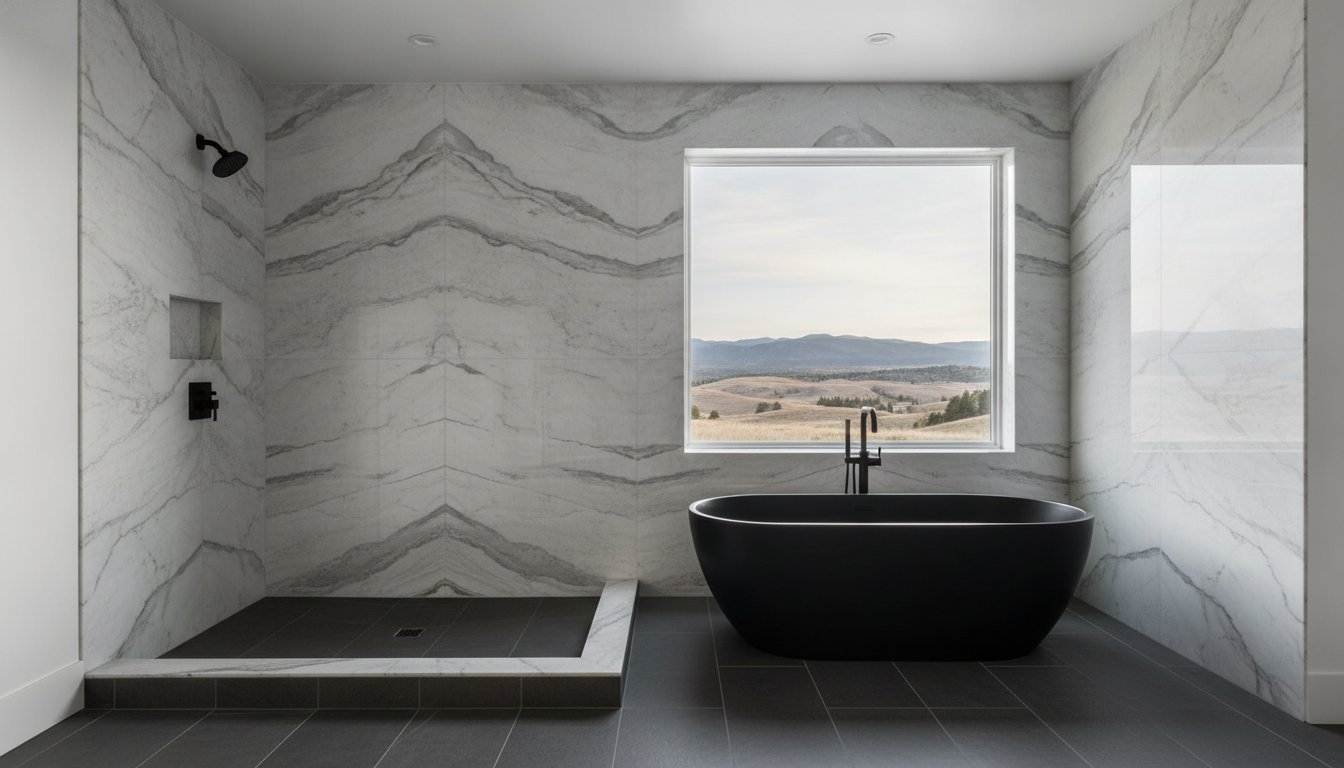
A luxury bathroom is only as permanent as the engineering behind the stone. While many focus on the visual allure of a spa-like retreat, the true value of high-end stone tile bathroom ideas lies in the invisible layers of sub-surface waterproofing and structural reinforcement. You recognize that natural stone represents a substantial investment in your property's long-term equity. It's a material that demands more than just a creative eye; it requires a disciplined approach to moisture management and substrate preparation to eliminate the risk of structural failure.
This article provides a masterclass in balancing architectural beauty with technical rigor. You'll discover how to curate a selection of premium materials, including marble, travertine, and basalt, while mastering the maintenance protocols that preserve their finish. We'll outline the exact engineering standards required for a successful installation and provide the criteria for selecting a craftsman capable of executing a bespoke stone project. From porosity ratings to precision grout lines, you'll gain the clarity needed to build a space that remains both structurally sound and aesthetically relevant for decades.
Key Takeaways
- Differentiate between stone types to select materials that balance visual depth with superior moisture resistance and safety.
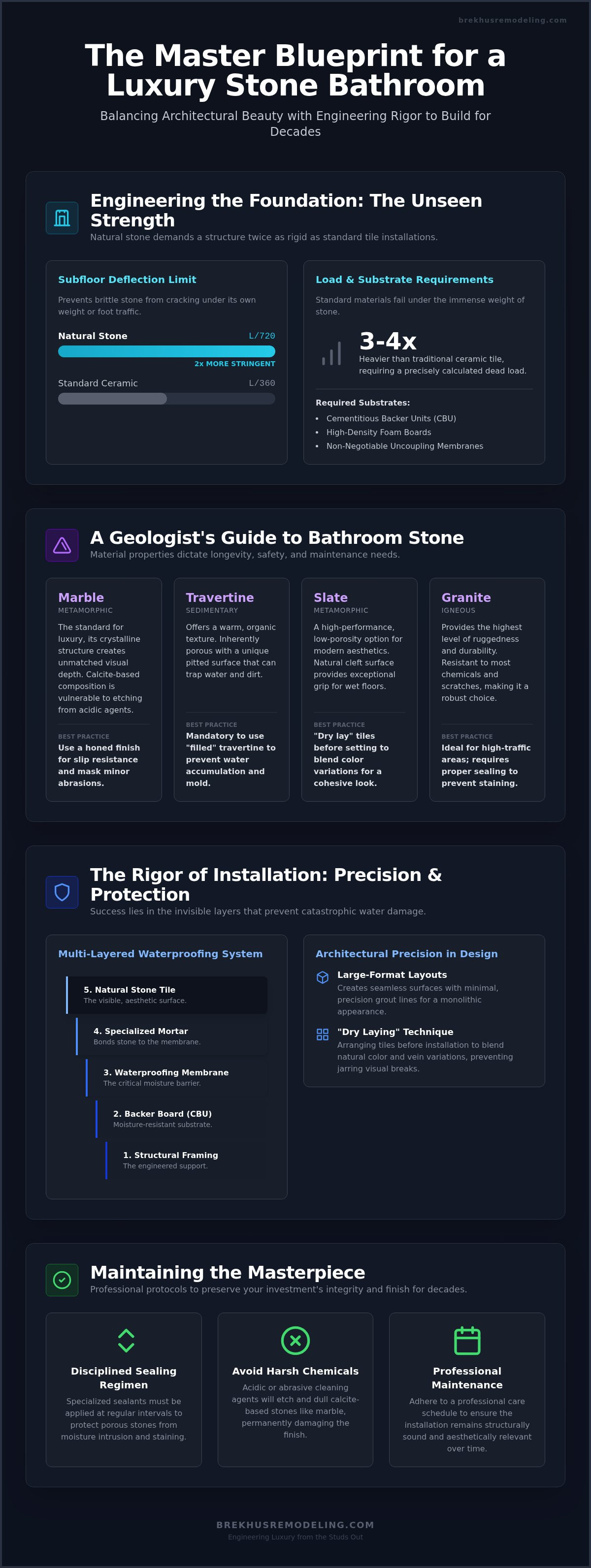
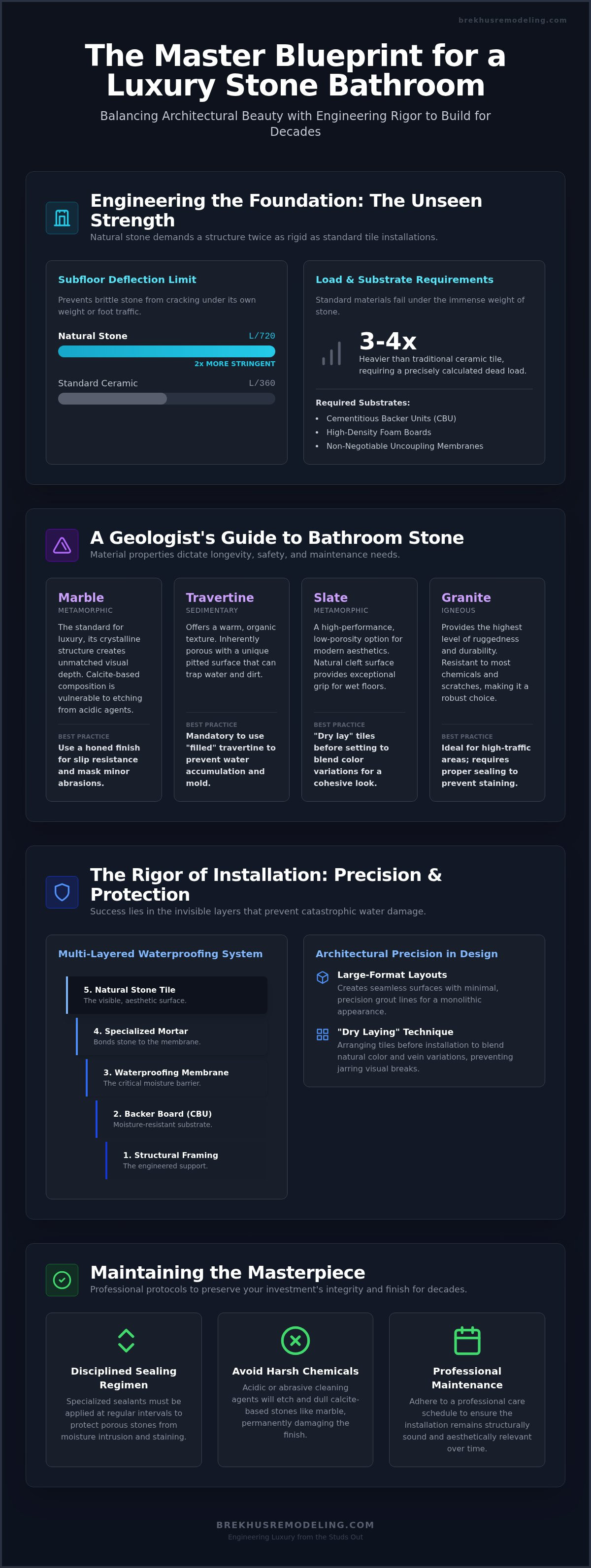
- Master the engineering requirements for natural stone, including the critical L/720 subfloor deflection rating needed to support high-density materials.
- Evaluate sophisticated stone tile bathroom ideas that prioritize large-format layouts to create seamless surfaces with minimal grout interference.
- Discover the multi-layered waterproofing and specialized mortar techniques essential for a custom shower installation that prevents structural water damage.
- Implement professional-grade maintenance protocols and sealing intervals to preserve the structural integrity and aesthetic finish of your stone investment.
The Aesthetic of Natural Stone: Selecting Materials for Longevity
Sophisticated stone tile bathroom ideas require a technical understanding of geological classifications. Every slab belongs to one of three categories: sedimentary, metamorphic, or igneous. These origins dictate the stone's density, absorption rate, and reaction to high humidity. Sedimentary stones like limestone and travertine are inherently porous, requiring specialized sealing to survive wet environments. Metamorphic stones such as marble and slate offer increased density but remain sensitive to chemical exposure. Igneous stones like granite provide the highest level of ruggedness. High-performance design prioritizes the Dynamic Coefficient of Friction (DCOF) to ensure safety without sacrificing the premium aesthetic. Executing high-end stone tile bathroom ideas involves more than just picking a color; it involves a rigorous assessment of material performance.
Selecting the correct stone grade is equally critical. Premium "Select" grades ensure minimal structural inclusions and a more uniform color palette, which is essential for maintaining a high-end, cohesive atmosphere. Technical finishes also play a role. A polished surface might offer a striking reflection, but it often fails to provide the necessary grip for floor applications. A master craftsman understands that the material's longevity depends on matching the stone's physical properties to the specific demands of the bathroom environment. This disciplined approach ensures that the installation retains its value and structural integrity over time.
Marble and Calcite: The Standard for Luxury Suites
Marble remains the pinnacle of architectural elegance. Its crystalline structure allows for deep light penetration, creating a visual depth that synthetic materials cannot replicate. However, its calcite-based composition makes it vulnerable to etching from acidic cleaning agents. Selecting a honed finish over a polished one is a strategic engineering choice. It increases slip resistance and masks the minor abrasions that occur over time. For a timeless result, white Carrara or Calacatta grades are selected for their consistent veining and structural purity. These materials require a disciplined sealing regimen to protect the delicate mineral structure from moisture intrusion.
Travertine and Slate: Textural Depth and Durability
Travertine introduces a warm, organic texture through its unique pitted surface. For bathroom applications, using "filled" travertine is mandatory. This process involves plugging the stone's natural voids with a color-matched resin to prevent water accumulation and internal mold growth. In contrast, slate offers a high-performance, low-porosity alternative for modern aesthetics. Its natural cleft surface provides exceptional grip, making it ideal for the wet floors of a custom shower installation. Managing the inherent color variation in Natural stone tile is achieved through "dry laying" the material before setting. This allows the installer to blend hues and ensure a cohesive transition across the entire floor, preventing jarring visual breaks in the stone's natural pattern.
Engineering the Foundation: Structural Requirements for Stone Tile
Natural stone is an architectural statement that places immense physical stress on a home's structure. While standard ceramic tiles are relatively light, natural stone slabs significantly increase the dead load on floor joists. A standard stone installation can weigh three to four times more than traditional tile. This weight requires a precise calculation of the subfloor's deflection rating. High-end stone tile bathroom ideas demand an engineering-first mindset. Industry-leading quality tile installation standards dictate an L/720 deflection limit for natural stone. This is twice as stringent as the L/360 standard used for ceramic. This ensures the floor remains rigid enough to prevent the brittle stone from cracking under its own weight or foot traffic.
Substrate selection is the next critical pillar. Standard drywall cannot support the sheer mass of floor-to-ceiling marble or granite. We utilize cementitious backer units (CBU) or high-density foam boards specifically engineered for heavy loads. Additionally, uncoupling membranes are a non-negotiable component of a premium install. These layers act as a buffer between the subfloor and the stone, allowing for independent movement without transferring stress to the tile surface. Wall studs must also be reinforced or spaced more closely to prevent bowing under the weight of large-format slabs. This level of preparation eliminates the risk of hairline cracks that often plague amateur installations.
Structural Integrity in Denver Homes
In the Denver region, soil expansion presents a unique challenge to structural permanence. The bentonite clay common in local soils can cause foundations to shift. This movement translates directly into the walls and floors of your home. When planning luxury master suites or structural home extensions, it's vital to coordinate with expert home remodeling contractors who understand these regional variables. A professional load-bearing assessment ensures that your home's framing can handle the long-term stress of a stone-heavy design. This technical foresight is what separates a temporary renovation from a lasting architectural asset. A successful execution of stone tile bathroom ideas depends on the substrate and the expertise of our stone installation experts who handle these complex requirements.
Stone Layout and Patterning: Architectural Precision in Design
The visual impact of natural stone depends entirely on the geometric logic of its layout. High-end stone tile bathroom ideas utilize large-format slabs to create a sense of expansive, monolithic scale. By minimizing the frequency of grout lines, the stone becomes a continuous architectural element rather than a repetitive grid. Centering the layout on primary focal points, such as a freestanding soaking tub or a custom vanity, establishes a sense of deliberate symmetry. This alignment ensures that the room's momentum flows toward its most significant features, reinforcing the architectural intent of the space.
Precise patterning also dictates the perceived volume of the master suite. Selecting a vertical orientation for rectangular stone can increase the perceived height of the ceiling, while a horizontal layout can broaden the visual width of a shower enclosure. Every cut must be calculated to avoid awkward transitions or "slivers" at the corners. This requires a meticulous planning phase that accounts for the exact dimensions of the raw material and the specific tolerances of the room. When executed with professional rigor, the layout transforms raw material into a sophisticated environment that balances texture with structural order.
Book-Matching and Vein Direction
Achieving a mirrored "butterfly" effect requires the technical process of book-matching. This involves utilizing consecutive slabs sliced from the same block of stone, polished on opposite sides to create a symmetrical pattern when joined. Managing this vein flow across wall-to-floor transitions is essential for visual continuity. A custom stone installation always begins with a comprehensive dry-lay phase. The craftsman arranges every tile on a flat surface to verify the color blending and vein alignment before any material is set. This step is non-negotiable for ensuring the final result meets the highest standards of architectural precision.
Sophisticated Patterns: Herringbone, Chevron, and Versailles
Complex patterns serve to complement the stone's natural grain and add historical depth to the design. A herringbone or chevron layout introduces directional movement, making it an excellent choice for stones with subtle, linear veining. In contrast, the Versailles pattern utilizes four distinct tile sizes to create a modular, staggered aesthetic often associated with premium French limestone or travertine. Mosaic stone accents can also be employed to define specific zones, such as a decorative "rug" pattern beneath a tub. These intricate arrangements require absolute precision in spacing and levelness to maintain the long-term integrity of the installation.
The Rigor of Installation: Waterproofing and Precision Grouting
Natural stone's durability is entirely dependent on the precision of its assembly. While aesthetic stone tile bathroom ideas dominate the planning phase, the technical execution of the install determines the project's lifespan. High-performance, polymer-modified thin-set mortars are mandatory for natural stone. These adhesives provide the necessary bond strength and flexibility to accommodate the material's weight and thermal expansion. Grout joint sizing must also be calculated with discipline. A joint that's too narrow can lead to "tenting" or cracking if the home settles, while one that's too wide can detract from the stone's architectural continuity.
Waterproofing Systems for Custom Showers
A custom shower installation requires a multi-layer waterproofing strategy to protect the home's structural framing. We integrate liquid-applied membranes or specialized sheet membranes to create a redundant barrier against moisture. Every corner transition and drain assembly must be hermetically sealed to prevent the slow, destructive seepage that leads to dry rot. This process begins long before the first tile is set. Coordinating with professional plumbing services during the rough-in phase ensures that all valves and drains are perfectly aligned with the finished stone's thickness.
The Art of Grouting and Sealing
Grouting natural stone is a high-stakes procedure. Porous materials like marble and travertine can absorb the pigments in wet grout, causing permanent discoloration known as "picture framing." To prevent this, we utilize a pre-sealing protocol where a high-quality impregnator is applied to the stone faces before the grout is spread. Choosing between epoxy and high-performance sanded grout depends on the joint width and the stone's sensitivity to scratching. Epoxy offers superior stain resistance and structural strength, but it requires a master's touch to apply without leaving a haze on the stone's surface.
Final sealing protocols are the last line of defense. A pH-neutral, solvent-based sealer is applied after the grout has fully cured to protect the stone from body oils, soaps, and hard water deposits. This isn't a one-time task; it's a professional standard that preserves the stone's finish and prevents the degradation of the mortar bed. For a result that combines technical excellence with lasting beauty, you can trust our team for your stone installation needs.
Maintaining the Masterpiece: Professional Care for Natural Stone
Natural stone requires a disciplined maintenance strategy to protect its geological integrity. While the initial selection of stone tile bathroom ideas focuses on architectural impact, the long-term performance of the space depends on a pH-neutral cleaning regimen. Standard household cleaners often contain acidic or abrasive agents that cause irreversible etching on calcite-based stones like marble and limestone. This isn't a suggestion; it's a requirement for longevity. Implementing a professional-grade care protocol ensures that the material's finish remains as pristine as the day it was set. By investing in high-end remodeling finishes, you're choosing materials that possess the density to age gracefully, provided they're managed with technical rigor.
The timeline for professional re-sealing is dictated by the stone's porosity and the frequency of use. High-traffic residential bathrooms typically require a fresh application of a high-performance impregnating sealer every twelve to twenty-four months. This barrier prevents moisture and oils from penetrating the stone's surface, which is critical for avoiding deep-seated staining or the development of efflorescence. Identifying early signs of mineral deposits is essential. If you notice a white, powdery substance on the grout or stone, it indicates that moisture is moving through the substrate and bringing salts to the surface. Addressing these issues immediately prevents structural degradation and maintains the visual standards of the suite.
Preventative Care and Daily Habits
In the Denver area, high mineral content in the water supply creates a persistent risk for stone surfaces. Hard water deposits can accumulate rapidly, obscuring the natural veining and creating a dull appearance. To prevent this, a daily squeegee protocol is essential in shower enclosures. For deeper cleaning, steam technology is often superior to chemical scrubbing. High-temperature steam effectively sanitizes the stone and grout without introducing harsh residues that can compromise the sealer's performance. It's an efficient way to maintain hygiene without the risk of chemical etching.
Professional Restoration vs. Routine Maintenance
Routine care is handled by the homeowner, but restoration requires the expertise of a master craftsman. Over several years, even the best-maintained marble may develop minor scratches or lose its luster. Professional stone polishing involves a mechanical honing process that removes a microscopic layer of the surface to reveal fresh, undamaged stone. This technical intervention ensures that your bathroom remains a high-value asset. A well-maintained stone bathroom doesn't just look better. It reinforces the market value of the entire property for decades, turning a renovation into a permanent legacy.
Securing Your Architectural Investment
A sophisticated stone bathroom represents a significant commitment to your home's long-term equity. You now understand that material selection begins with geological density and ends with a rigorous maintenance protocol. By prioritizing the structural requirements of stone, such as the L/720 deflection standard and advanced waterproofing, you eliminate the risks of moisture damage and structural failure. These technical foundations ensure that your stone tile bathroom ideas are translated into a space that's as durable as it is visually striking.
Success in high-end renovation depends on the precision of the build. Since 2004, our team has established itself as Denver's choice for high-end residential remodeling by focusing on the invisible engineering that supports luxury finishes. Whether you're planning a structural home extension or a precision-engineered custom shower, the expertise of your craftsman is the final determining factor in the project's longevity. Consult with Brekhus Remodeling for your custom stone bathroom project to ensure every detail is executed with professional rigor. Your commitment to these standards will result in a master suite that remains a permanent architectural asset for decades to come.
Frequently Asked Questions
What is the best natural stone for a walk-in shower?
Slate and granite are the superior choices for walk-in showers due to their low absorption rates and natural slip resistance. While marble is aesthetically pleasing, it requires more intensive maintenance in wet zones. In the Denver climate, where indoor humidity levels fluctuate, choosing a dense material prevents the internal moisture expansion that can lead to structural cracks. We recommend materials with a high Dynamic Coefficient of Friction to ensure safety on wet surfaces.
Does natural stone tile make a bathroom feel colder?
Natural stone possesses high thermal mass, which means it absorbs and retains the ambient temperature of the room. Without a heating source, it can feel cool underfoot during Denver winters. However, this property makes stone the most efficient material for heat distribution when paired with a professional electrical or hydronic system. The stone acts as a thermal battery, radiating warmth evenly across the floor long after the heating system has cycled off.
How often does stone tile in a bathroom need to be sealed?
Most stone tile bathroom ideas require a professional sealing application every 12 to 24 months to maintain their protective barrier. The exact frequency depends on the stone's porosity and the volume of water exposure. High-traffic master suites in Denver often benefit from an annual inspection to verify the sealer's integrity. You can test this by placing a few drops of water on the surface; if it fails to bead, the stone is vulnerable.
Can natural stone be used with radiant floor heating?
Natural stone is the ideal substrate for radiant floor heating because of its exceptional thermal conductivity. Unlike wood or thick carpeting, stone allows heat to transfer rapidly from the heating elements to the surface. This pairing is a standard feature in high-end Denver bathroom renovations. It eliminates the "cold stone" stigma while providing a consistent, energy-efficient warmth that enhances the comfort and resale value of the master suite.
Why is natural stone more expensive to install than porcelain?
The increased cost of stone installation stems from the material's weight and the technical precision required for a successful build. Natural stone requires a more rigid subfloor with an L/720 deflection rating to prevent cracking. Installers must also perform back-buttering to ensure 100% mortar coverage and use specialized diamond-blade saws for every cut. These rigorous engineering standards are necessary to protect your investment from the structural failures common in DIY or handyman projects.
Is marble too porous for a high-traffic family bathroom?
Marble is a viable option for high-traffic bathrooms provided it's specified with a honed finish and a high-performance sealer. While it's more porous than granite, it's not inherently too fragile for daily use. The key is implementing a disciplined cleaning regimen and avoiding acidic products that cause etching. For families in Denver seeking a balance of luxury and durability, we often recommend denser marble varieties like Danby, which offer lower absorption rates.
What is the difference between honed and polished stone tile?
The primary difference lies in the surface texture and light reflectivity. Polished stone features a high-gloss, reflective finish that emphasizes the stone's color and veining. Honed stone is ground to a flat, matte, or satin finish, providing a more contemporary look. We typically specify honed finishes for shower floors and high-moisture areas because they provide superior slip resistance and are more effective at concealing the minor scratches that occur over time.
How do I prevent grout mold in a stone tile bathroom?
Preventing grout mold requires a multi-layered approach starting with a precision custom shower installation and proper ventilation. Utilizing high-performance epoxy or polymer-modified grouts creates a less hospitable environment for fungal growth compared to standard cementitious products. Additionally, using a squeegee after every shower and maintaining a pH-neutral cleaning routine prevents the soap scum buildup that serves as a food source for mold. Professional sealing of both the stone and grout is the final essential step.