Natural Stone Countertop Installers: The Standard for Precision in Denver (2026)
Find expert natural stone countertop installers near me in Denver. Our 2026 guide covers the engineering standards for a flawless, fracture-free installation.
A flawless natural stone installation is an act of structural engineering, not a simple cosmetic upgrade. For Denver homeowners investing in rare quartzite or expansive marble slabs, the margin for error is nonexistent. You understand that a single miscalculation in load distribution or a poorly executed seam can compromise an entire kitchen renovation. Finding the right natural stone countertop installers near me requires looking beyond aesthetic portfolios to find technical mastery. It's about securing a professional who respects the geological integrity of the material and the architectural requirements of your home.
This guide details the rigorous standards required for precision stone work in high-end residential projects. You'll discover how master craftsmanship prevents common failures like stress fractures and visible joints while ensuring long-term durability. We examine the specific technical protocols that define the Denver standard for 2026, from structural reinforcement for heavy slabs to the nuances of leathered finishes. By prioritizing engineering over mere decoration, you ensure your investment remains a permanent fixture of excellence in your residence.
Key Takeaways
- Natural stone installation requires a fusion of architectural design and structural engineering to manage the immense weight and unique properties of premium slabs.
- Understanding the specific density and porosity metrics of granite, marble, and quartzite is essential for selecting a material that meets your performance requirements.
- Identifying the most qualified natural stone countertop installers near me involves verifying their proficiency with laser templating and complex vein-matching techniques.
- Precise seam management and structural reinforcement are the primary factors that prevent slab fractures and ensure a monolithic, high-end appearance.
- Expert stone fabrication integrates end-to-end technical support, from initial structural modifications to the final application of protective finishes.
The Technical Complexity of Natural Stone Installation
Natural stone installation represents a sophisticated fusion of lithic engineering and architectural design. Unlike mass-produced materials, Dimension stone involves working with unique geological formations that possess inherent variations in density and structural integrity. For high-end Denver residences, this means every slab requires a custom engineering plan before it ever reaches the job site. Homeowners searching for natural stone countertop installers near me often underestimate the technical rigor required to handle these premium materials safely. It's not merely a decorative finish; it's a structural component that must be integrated into the home's existing framework.
Premium slabs like quartzite or marble demand specialized handling that engineered quartz simply doesn't require. Quartz is a resin-bound composite with predictable stress points. Conversely, natural stone contains mineral veins and natural fissures that can act as fault lines under improper tension. A master installer identifies these geological vulnerabilities during the initial inspection. Failure to account for these nuances often leads to catastrophic cracking during the fabrication or installation phases, making professional expertise a requirement rather than an option.
Understanding Structural Load and Substrate Preparation
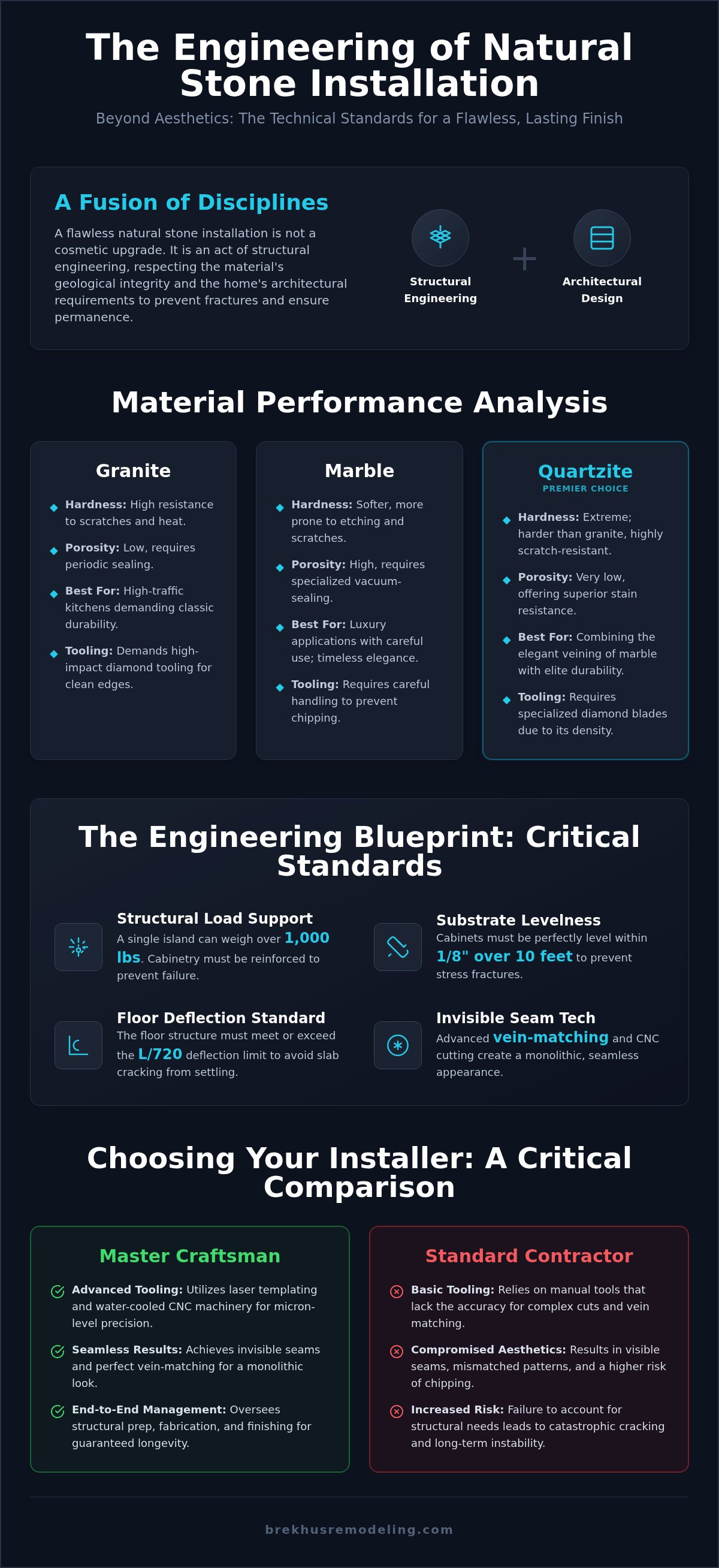
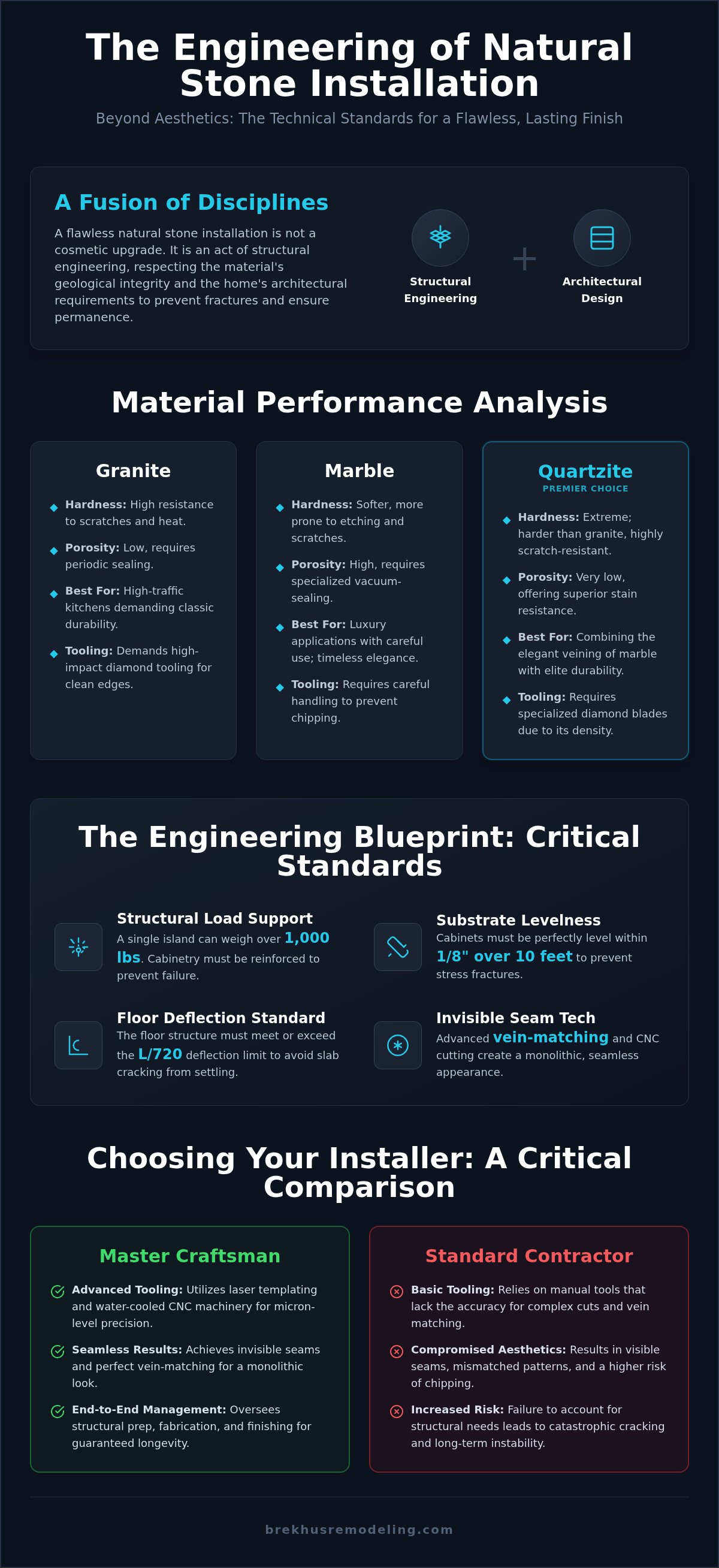
Large-format granite and quartzite slabs exert immense pressure on a home's infrastructure. A single kitchen island can weigh upwards of 1,000 pounds, requiring cabinetry that's perfectly level and structurally reinforced. We ensure that deflection limits are strictly managed. If the substrate or floor joists settle even a fraction of an inch, the stone can develop stress fractures. Precision leveling is the only way to prevent seam failure and long-term structural instability. This process involves:
- Verifying cabinet levelness within 1/8 inch over a 10-foot span.
- Reinforcing cabinet carcasses to support the concentrated weight of heavy stone.
- Ensuring the floor structure meets the L/720 deflection standard for stone.
The Difference Between Handyman and Master Installer
The distinction between a standard contractor and a master craftsman lies in the tooling and the technical approach. High-end residential projects require specialized water-cooled CNC machinery and laser-guided bridge saws to achieve the tolerances necessary for invisible seams. Big-box installers often rely on manual tools that lack the accuracy required for complex vein-matching. When looking for natural stone countertop installers near me, prioritize professionals who provide end-to-end management of both the aesthetic and structural elements of the build. This disciplined approach ensures the longevity of the installation and preserves the value of the stone.
Evaluating Material Performance: Granite, Marble, and Quartzite
Selecting the correct material requires a disciplined analysis of lithic properties rather than a purely aesthetic preference. Every natural stone possesses a unique mineral composition that dictates its porosity, density, and resistance to environmental stressors. The selection of dimension stone relies on established U.S. Geological Survey criteria regarding absorption and compressive strength. These metrics determine how a slab will respond to daily utility, chemical exposure, and thermal shock. Finding capable natural stone countertop installers near me is the first step in ensuring these materials perform as engineered within your specific architectural context.
Installation methodology changes based on the stone's internal structure. For instance, high-porosity stones like certain marbles require specialized vacuum-sealing techniques during fabrication to prevent subsurface staining. Conversely, dense granites demand high-impact diamond tooling to achieve clean, non-chipped edges. A rigorous framework for selection involves balancing kitchen utility with aesthetic priority. If your lifestyle involves heavy culinary use, prioritizing scratch-hardness and low absorption rates is mandatory for long-term project success.
The Rise of Quartzite in Luxury Denver Homes
Quartzite has emerged as the premier choice for Denver homeowners who demand the elegant veining of marble without its characteristic softness. This metamorphic rock consists almost entirely of silica, placing it at the top of the hardness scale. While this provides superior resistance to scratches and heat, it creates significant challenges during fabrication. Cutting high-hardness quartzite slabs requires slowed feed rates and constant water cooling to prevent thermal cracking. The performance advantages in high-traffic kitchens are undeniable; it remains impervious to the acid etching that often plagues calcium-based stones.
Marble and Granite: Classic Performance Standards
Classic materials like marble and granite remain staples of high-end design, provided their maintenance requirements are respected. Polished marble offers a high-gloss finish but remains sensitive to acidic substances; honed marble, by contrast, provides a softer look that masks minor etching more effectively. Granite remains the standard for structural reliability in heavy-use or outdoor areas due to its rugged crystalline structure. Ensuring the longevity of these surfaces requires a professional application of high-grade penetrative sealants. Securing natural stone countertop installers near me who understand the chemical sensitivity of different minerals is vital to avoiding permanent slab damage. If you're planning a complex installation, consulting with a specialist at Brekhus Remodeling can provide the technical guidance needed to match material performance with your home's requirements.
The Engineering of Precision Templating and Seam Management
Precision begins with digital laser templating. This phase bridges the gap between the architectural plan and physical fabrication. Qualified natural stone countertop installers near me use laser scanners to capture the exact dimensions of your cabinetry, accounting for wall irregularities and structural settling. This data ensures a fit within fractions of an inch. It eliminates the need for aggressive on-site adjustments that can weaken the stone. A perfect fit at the template stage is the only way to guarantee the long-term stability of the installation.
Vein-matching stands as the hallmark of master craftsmanship. For slabs with high movement, such as Calacatta marble or Taj Mahal quartzite, the installer must align the natural mineral patterns across every seam. This creates a monolithic appearance where the transition between slabs is nearly imperceptible. Achieving this requires software-driven slab optimization. The fabricator nests the templates onto high-resolution images of the raw stone to maximize aesthetic flow while minimizing material waste. Technical standards for seam width are strict; a professional joint should typically not exceed 1/16 of an inch.
Digital Templating and Slab Optimization
Laser measurement provides the foundation for accuracy. It captures the specific contours of your walls, which are rarely perfectly straight. The software then maps these templates onto the slabs. This digital dry-fit allows you to approve the vein placement before a single cut is made. Professional natural stone countertop installers near me prioritize this phase to prevent structural stress caused by ill-fitting sections. It ensures that every cutout for sinks or cooktops is positioned with mathematical certainty.
The Mastery of Invisible Seams
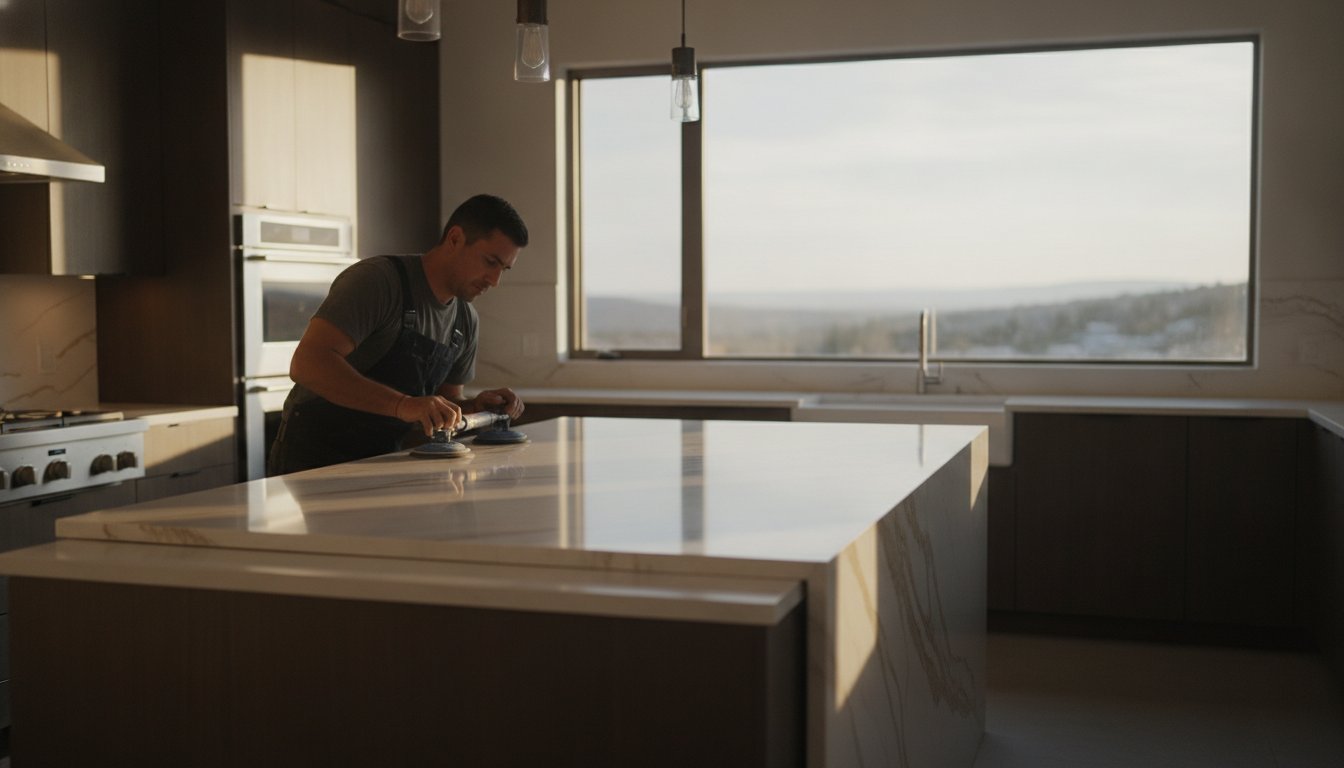
Invisible seams require a combination of chemical engineering and mechanical force. Installers use two-part epoxy resins specifically pigmented to match the stone's base color and mineral inclusions. Mechanical suction tools, known as seam setters, pull the slabs together with immense pressure to ensure the joint is perfectly level. In Denver's arid climate, the low humidity can accelerate epoxy curing times. Technicians must calibrate their adhesive mixtures to account for these local environmental factors. This ensures the bond reaches full structural strength without becoming brittle.
Thick-profile aesthetics are achieved through mitred edge construction. This involves cutting the slab edge at a 45-degree angle and joining it with a vertical piece of the same material. When executed correctly, the vein continues over the edge. This provides the illusion of a massive, solid block of stone without the excessive weight that would strain your cabinetry or flooring.
Selecting a Professional Installer in the Denver Metro Area
The selection process for natural stone countertop installers near me should be viewed as a rigorous technical audit. You aren't simply hiring labor; you are securing a partner for a high-stakes architectural execution. High-value materials like Taj Mahal quartzite or Carrara marble require more than basic fabrication. They demand a contractor who understands the structural load requirements of Denver’s residential building codes. Before signing a contract, verify the installer’s specific experience with the density of your chosen slab. A master craftsman should provide a detailed plan for structural reinforcement, particularly for heavy island installations that exceed standard weight limits.
A professional audit of a potential contractor involves five critical questions:
- How do you calculate the deflection limits of the existing cabinetry and floor joists?
- Can you provide macro-detail photographs of vein-matched seams from previous projects?
- What specific protocol do you follow for the high-altitude transport and handling of fragile slabs?
- Are you insured for the full replacement value of the specific material being installed?
- Do you provide end-to-end management, including the coordination of mechanical and plumbing reconnections?
Vetting Technical Portfolios and References
Examine technical portfolios with a focus on macro-detail. High-resolution photos of seam work reveal the true caliber of an installer. Look for tight joints and adhesive color-matching that mimics the stone’s natural mineral inclusions. Visiting an active job site allows you to observe professional rigor firsthand. You should see a clean workspace, specialized diamond-tooled machinery, and a disciplined crew. There is a profound difference between a high-volume fabricator and a full-service remodeler who prioritizes the long-term integrity of the installation.
Local Coordination and Denver Building Standards
Denver presents unique logistical challenges that require local expertise. High-rise deliveries in neighborhoods like LoDo or Cherry Creek demand precise coordination with building management and specialized crane or elevator logistics. The installer must also synchronize with plumbers and electricians to ensure that the stone installation integrates perfectly with the home's mechanical systems. This structural oversight prevents the common delays and errors associated with fragmented subcontracting. To ensure your project meets these uncompromising standards, consult with the experts at Brekhus Remodeling for a comprehensive technical assessment.
Brekhus Remodeling: Mastery in Stone and Structural Integrity
Since 2004, Brekhus Remodeling has established the definitive benchmark for residential stone application in the Denver metro area. We don't view stone as a mere aesthetic upgrade; it's a critical structural element that requires advanced engineering and specialized handling. For homeowners currently vetting natural stone countertop installers near me, our firm offers a disciplined, end-to-end management process. This includes everything from the initial structural substrate reinforcement to the final precision polish. Integrating this level of mastery into a high-end kitchen remodel ensures that your architectural vision is supported by unwavering technical integrity.
The Brekhus Standard of Excellence
Meticulous attention to detail is the foundation of our reputation. We prioritize substance over trends. Our team of master craftsmen focuses on structural permanence, ensuring that every slab of quartzite or marble is installed to withstand the test of time. We operate as an owner-operated local business that understands the specific demands of Denver's high-end residential market. By employing specialized installers who understand the mineral nuances of dimension stone, we prevent the stress fractures and seam failures common with less experienced contractors. This commitment to professional rigor is why discerning clients trust us as the most qualified natural stone countertop installers near me for complex, high-stakes renovations.
Consultation and Project Initiation
A successful project begins with a comprehensive technical assessment. We evaluate the specific load-bearing requirements of your home to identify potential engineering challenges before the first cut is made. For clients pursuing full home remodels, Brekhus provides the structural oversight necessary to coordinate stone installation with other high-performance finishes. This holistic approach guarantees that every detail, from vein-matching to plumbing integration, is executed with mathematical certainty. If you're ready to partner with a firm that values longevity and precision, Schedule a consultation for your Denver estate to initiate your professional technical evaluation.
Elevating Your Residence with Technical Mastery
Precision in natural stone installation is the definitive factor in the longevity of your kitchen or bathroom renovation. It requires a disciplined approach to structural load management and digital templating. By prioritizing technical rigor over simple aesthetics, you ensure that high-value materials like quartzite and marble remain free from stress fractures and seam failures. Finding the most qualified natural stone countertop installers near me is about more than sourcing labor; it's about securing an engineering partner who respects the geological integrity of your investment.
Brekhus Remodeling brings over 20 years of architectural remodeling expertise to every project. We specialize in the complex handling of premium quartzite and marble, providing comprehensive structural and aesthetic management from the first template to the final polish. Our master craftsmen are dedicated to the highest standards of professional execution. Partner with Denver’s Master Stone Installers to ensure your next renovation is built on a foundation of excellence. We look forward to realizing your vision with uncompromising accuracy.
Frequently Asked Questions
What is the best natural stone for a high-traffic Denver kitchen?
Quartzite is the premier choice for high-traffic Denver kitchens because it combines the aesthetic of marble with superior hardness. It resists the acid etching and scratching that often plague softer materials. Granite remains a reliable standard for those prioritizing ruggedness and lower maintenance. Finding natural stone countertop installers near me who understand the density variations of these minerals is critical to ensuring they are handled correctly for Colorado’s specific dry climate.
How long does the natural stone countertop installation process take?
The installation process generally requires seven to ten business days from the final digital templating to the physical installation. This timeline allows for precision fabrication, including water-cooled cutting and edge profiling, in a controlled shop environment. Complex projects involving waterfall edges or ceiling-height backsplashes may extend this duration. We prioritize accuracy over speed to ensure the stone is perfectly calibrated to your home's structural requirements, preventing invasive on-site adjustments.
Do I need to reinforce my cabinets before installing quartzite or granite?
Structural reinforcement is mandatory for large-format slabs like quartzite or granite. A standard kitchen island can weigh over 1,000 pounds, which often exceeds the load-bearing capacity of unreinforced cabinetry. We evaluate your cabinet carcasses and floor joists to ensure they meet strict deflection standards. If the substrate isn't perfectly level and stable, the stone will eventually develop stress fractures. Professional installers must verify these structural metrics before the slab is delivered.
What is the difference between a fabricator and a countertop installer?
A fabricator specializes in the technical cutting and shaping of the raw slab using CNC machinery and bridge saws. An installer focuses on the physical placement, leveling, and seam joining within the residence. Brekhus Remodeling operates as a full-service master craftsman, managing both phases to ensure continuity of quality. This end-to-end approach eliminates communication errors between separate vendors and ensures that the final fit meets the precise tolerances established during templating.
How do professional installers hide seams in natural stone?
Master installers achieve nearly invisible seams through a combination of chemical engineering and mechanical force. We use two-part epoxy resins custom-pigmented to match the stone's base color and mineral patterns. Mechanical seam setters then pull the slabs together with immense pressure to ensure a perfectly level joint. In Denver’s dry climate, we calibrate the adhesive mixture to account for faster curing times, ensuring the bond reaches maximum structural strength without becoming brittle or visible.
Can natural stone be installed over existing countertops?
Natural stone cannot be installed over existing countertops because it compromises the structural integrity and architectural height of the workspace. The weight of a 3cm slab requires a direct, level connection to reinforced cabinetry to prevent settling and cracking. Removing the old material allows us to inspect the substrate and make necessary structural modifications. This disciplined approach is the only way to guarantee the longevity and safety of your stone installation in a high-end residence.
Why is quartzite more expensive to install than granite or marble?
Quartzite is more labor-intensive to install because of its extreme hardness, which ranks significantly higher on the Mohs scale than granite. This density requires specialized diamond-tooled machinery and slower feed rates during the cutting process to prevent thermal cracking. The material is also more prone to splintering if not handled with expert precision. When searching for natural stone countertop installers near me, it's vital to select a team with the specialized equipment required for this specific mineral.
How do I maintain my natural stone countertops after professional installation?
Maintaining your stone surfaces requires regular sealing and the use of pH-neutral cleaning agents. We recommend a professional-grade penetrative sealer every one to two years, depending on the stone's porosity and usage. Avoid using abrasive pads or acidic cleaners, which can dull the polish or degrade the sealer. For Denver homeowners, maintaining a consistent cleaning schedule prevents mineral buildup from local water and preserves the stone’s geological luster for decades of high-performance use.