Home Renovation Project Management: 2026 Practical Guide
Master project management for home renovation. Learn how to sequence tasks, coordinate trades, manage permits, and keep your remodeling timeline on track.

A renovation rarely falls behind because of one dramatic mistake. More often, progress is lost through a late design decision, an uncoordinated trade, or a material choice made before the details are settled. Effective project management for home renovation connects those decisions in the right sequence and makes responsibilities clear from planning through construction.
It’s reasonable to want control over the work while avoiding preventable disruption at home. The right management approach depends on the project’s complexity, your experience, and how much coordination you can take on. Software can help organize information, but it doesn’t replace the judgment and accountability needed to coordinate design, permits, materials, and trades.
This guide explains the key renovation phases, how responsibilities differ between self-management and contractor-led coordination, and what to clarify when comparing scopes. It also covers practical preparation for a conversation with a Denver-area remodeler: defining priorities, gathering project details, and confirming which permitting authority applies to your address. The result is a clearer basis for choosing an approach that fits your home and priorities.
Key Takeaways
- Project management for home renovation connects scope, decisions, people, materials, and work sequence while keeping design, construction, and homeowner approvals distinct.
- Use a clear progression from defining goals to final review, with design choices and material selections informing the construction plan.
- Compare self-management, software, and contractor-led coordination against your project’s complexity, trade count, availability, and confidence making decisions.
- Set up a shared decision log to record selections, approvals, questions, and change requests, alongside clear communication expectations.
- When evaluating a Denver remodeling partner, clarify trade coordination, scope, change handling, and closeout so the proposed process fits your project and desired level of involvement.
What Project Management for Home Renovation Actually Covers
Project management for home renovation is the coordination needed to move an agreed scope from initial planning through construction and closeout. It connects decisions, people, materials, and work sequence so each phase has the information and preparation it needs. Renovation is a process of improving a structure; managing it means making the steps, responsibilities, and approvals clear as the work advances.
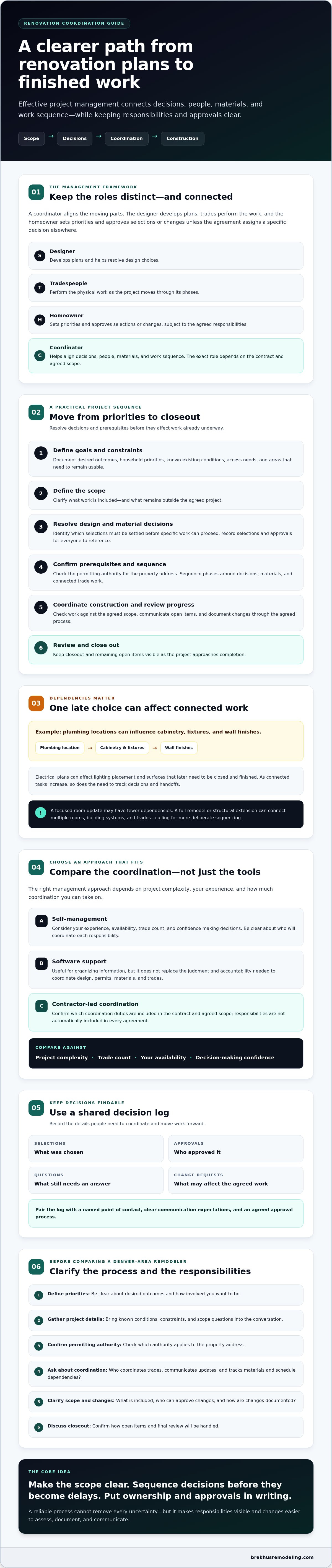
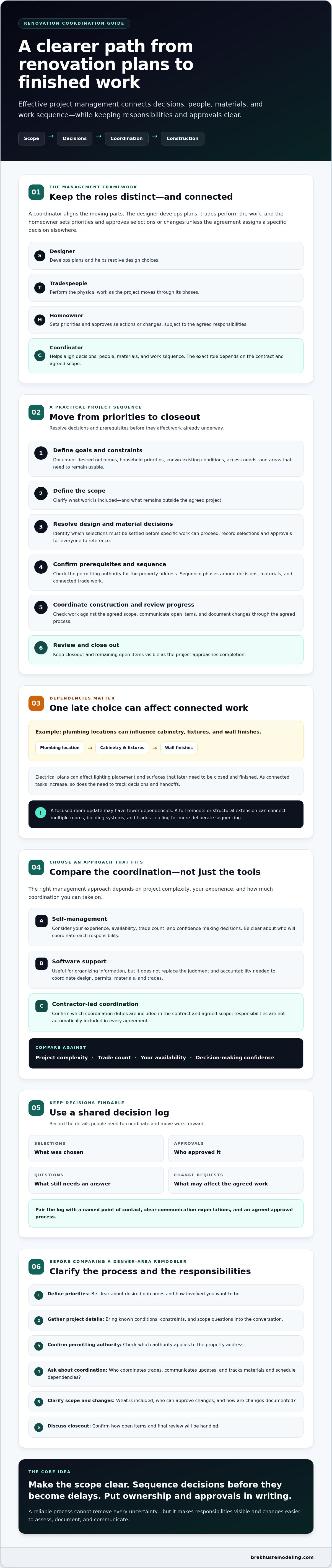
Management is not the same as design or construction labor. A designer develops plans and helps resolve design choices. Tradespeople perform the physical work. The homeowner sets priorities and approves selections or changes unless the agreement assigns a specific decision elsewhere. A coordinator helps align the pieces, but the exact role depends on the contract and agreed project scope.
Which responsibilities belong in a renovation management plan?
A written plan should identify how the project will be organized, who communicates updates, and how decisions are recorded. Responsibilities commonly include:
- Scope definition: Clarify what work is included and what remains outside the agreed project.
- Schedule development: Sequence phases and identify decisions or materials that affect when work can proceed.
- Communication: Establish the main point of contact and how questions, updates, and issues will be handled.
- Procurement coordination: Track selections and material needs that must align with the construction sequence.
- Progress review: Check work against the agreed scope and address open items or changes through a documented process.
These duties are not automatically included in every contractor agreement. Before work begins, ask who owns each responsibility, who can approve changes, and how decisions will be documented. A named point of contact and a clear approval process reduce ambiguity while keeping the homeowner involved in decisions that are theirs to make.
Why project complexity changes the coordination required
A focused room update may have a narrower scope and fewer dependencies. A full remodel or structural home extension can connect multiple rooms, building systems, and trades, requiring more deliberate sequencing. Plumbing and electrical work, for example, may need to be coordinated before walls and finishes are completed. A fixture or layout decision made late can affect work already planned around it.
As connected tasks increase, so does the need to track decisions and handoffs. A comprehensive residential full remodel illustrates why planning across construction phases matters: trade coordination and finish quality depend on work fitting together, not simply being completed one task at a time.
Good management supports clarity and control, but it can’t eliminate every uncertainty. Existing conditions, changing decisions, or other project constraints may require adjustments. A reliable process makes responsibilities visible and changes easier to assess, document, and communicate.
How Home Renovation Project Management Moves from Planning to Completion
A workable construction plan is built before crews begin. Goals establish what the renovation must accomplish; scope, design decisions, materials, and prerequisites then determine how the work can be sequenced. Project management for home renovation turns those inputs into coordinated phases, with decision points identified before they affect work already underway.
Plan scope, selections, and prerequisites before construction
Begin by documenting desired outcomes, known existing conditions, household priorities, and constraints such as access or areas that need to remain usable. For major remodels or structural extensions where underlying movement or settling is discovered, consulting specialists like Hercules Foundation Repair early ensures the property is properly stabilized before framing or finish work begins. Translate those needs into a defined scope. Then identify which design and material decisions must be resolved before specific work can proceed. Record selections and approvals so everyone doing the work can refer to the same information.
Technical decisions have downstream effects. Plumbing locations can influence cabinetry, fixtures, and wall finishes; electrical plans can affect lighting placement and the surfaces that later need to be closed and finished. Confirm the applicable permitting authority for the property address, then verify which permits or inspections apply to the specific scope. Requirements vary by jurisdiction and project.
Coordinate trades, decisions, and project closeout
A typical sequence may include preparation and demolition, rough plumbing or electrical work, required inspections, installation, and finish work. The precise order depends on the project. A schedule should show dependencies, such as work that must be completed or reviewed before walls are closed, rather than treating every trade as an independent appointment. It should also allow for reassessment when conditions or decisions change.
Regular progress updates help surface the next homeowner decision before it becomes a hold point. Keep a record of open questions, selections, approvals, changes, and their effect on planned work. For guidance on evaluating estimates and contractors before agreeing to work, consult the Federal Trade Commission’s advice on avoiding home improvement scams.
- Define goals and scope: Set priorities and document included work.
- Resolve design and selections: Confirm decisions that affect dimensions, systems, materials, or finishes.
- Confirm prerequisites: Check address-specific permitting and inspection requirements before construction.
- Sequence and coordinate work: Align trades, deliveries, approvals, and required reviews around task dependencies.
- Review and close out: Walk through completed work, create a punch list for outstanding items, and confirm the agreed scope and project documentation.
At closeout, compare completed work with the agreed scope and document anything unresolved. A clear review gives everyone a shared record of what is complete and what needs follow-up. Homeowners preparing a residential renovation can use a project scope and next-steps discussion to clarify how construction phases and responsibilities may fit their plans.
Self-Management, Software, or Contractor-Led Coordination?
There’s no single management model that fits every renovation. The right choice depends on the documented scope, the number of trades and connected work areas, your availability, and your confidence making decisions as work progresses. A focused update with few dependencies may be manageable for an organized homeowner. A full remodel or home extension involving several trades can require more frequent coordination and clearer accountability.
Project management for home renovation is also a matter of workload, not just preference. Even when a project seems straightforward, someone must track scheduling, communication, deliveries, approvals, and open issues. If those responsibilities aren’t clearly assigned, tasks can be missed or decisions can arrive too late to inform the next phase.
When self-managing a renovation may be workable
Self-management may suit a limited scope, a small number of trades, and a homeowner with time to stay engaged. The role involves more than checking progress: it can include confirming schedules, coordinating access and deliveries, relaying information, obtaining approvals, and tracking unresolved questions. Keep a dated record of selections, decisions, and changes, including who approved them and which work they affect.
What software can and can’t do
A shared calendar, spreadsheet, or project platform can centralize schedules, selection details, messages, and decision records. That visibility is useful when several people need the same current information. But software doesn’t assess site conditions, resolve conflicting trade needs, confirm that work is ready to proceed, or coordinate construction on its own. A person still needs to interpret updates and act on them.
What contractor-led coordination should clarify
Contractor-led coordination can make sense when the scope involves multiple trades or when you can’t consistently manage day-to-day communication. Don’t assume the phrase covers every responsibility. Review the agreement and ask who coordinates subcontractors, shares schedule updates, tracks decisions, and communicates issues. Confirm how change requests and approvals are documented, and what information you’re expected to provide.
Compare the stated responsibilities with the work involved. For example, a project that connects plumbing, electrical, and finish work needs coordination across those phases, not just a schedule document. Similarly, for exterior home improvement and restoration projects in Denver, specialized contractors such as Royalty Construction highlight how managing trade handoffs and material timelines upfront prevents costly disruptions. Ask how open decisions are identified before they affect subsequent tasks, and how completed work and unresolved items will be reviewed. The process should suit both the project’s complexity and the level of homeowner involvement you want.
Use this decision check: If you have the time and experience to manage each handoff, self-management may be practical. If you mainly need a shared record, software can support your process. If trade coordination and decision tracking exceed your available time, clarify the contractor’s coordination scope before work begins. In every model, name who is accountable for each task.
A reliable management process makes the project’s scope, decisions, communication, and records easy to follow. Before work begins, agree on how updates will be shared and who has authority to approve selections or changes. This structure helps everyone work from the same information, especially when one decision affects several trades or later phases.Create a reliable communication and decision system
Set expectations early. Name the primary contacts, choose preferred communication channels, agree on an update cadence, and establish how urgent issues will be raised. Homeowners should also understand when their input is needed and how promptly selections or approvals should be provided to support the planned sequence. Clear expectations reduce the risk of an unresolved decision holding up dependent work.
Keep a shared decision log, whether it’s a simple document or a project tool. For each entry, note the date, decision or question, responsible person, approval status, and affected work where relevant. Include material selections, design approvals, open questions, and proposed changes. This record gives the homeowner and project team a common reference instead of relying on memory or scattered messages.
Track scope changes and trade dependencies
Use a setup checklist to establish the essentials:
- Scope: Record the included work, key priorities, and known constraints.
- Decision owners: Identify who recommends, approves, and documents each decision.
- Communication: Set contacts, channels, update frequency, and escalation steps.
- Records: Maintain current selections, approvals, questions, schedule updates, and change requests in an agreed location.
- Permits and inspections: Confirm requirements with the authority responsible for the project address. Denver-area requirements can vary by location and scope.
Document each proposed change before treating it as part of the agreed work. Record whether it’s approved, who approved it, and any implications for scope or sequence. A plumbing change, for example, may affect electrical coordination or the timing of finishes. For a closer look at system dependencies, see this guide to upgrading plumbing and electrical for a home remodel.
Review schedule updates as planning information, not guaranteed completion dates. Ask what has changed, which tasks are affected, and whether a decision, inspection, delivery, or trade dependency needs attention. Project management for home renovation works best when changes are visible and discussed before they affect later work.
For a residential project, review your renovation scope and coordination needs to clarify responsibilities and next steps.
Choosing a Denver Remodeling Partner for Project Coordination
A remodeling partner’s proposed process should fit the actual scope of your home, not just sound comprehensive in a meeting. Before agreeing to work, compare the written responsibilities with the number of rooms, systems, and trades involved, along with the level of involvement you want to maintain. Clear project management for home renovation makes it easier to understand who coordinates the work, who communicates updates, and where your approvals are required.
Questions to ask before agreeing to a project scope
Use these questions to clarify how coordination will work in practice:
- Scope: Which work is included in the agreement, and how are exclusions or homeowner responsibilities identified?
- Coordination: Who coordinates each construction phase and serves as your primary contact?
- Communication: How often are updates provided, and how are schedule changes or open decisions communicated?
- Approvals: How are selections and homeowner approvals documented, and who can authorize a change?
- Closeout: How will completed work, remaining items, and project documentation be reviewed?
Ask for clear answers about how changes are recorded and how their effects on scope or sequencing are communicated. A process that works for a contained room renovation may not provide enough coordination for a full remodel involving plumbing, electrical, and finish work. Review the proposed responsibilities against your project’s dependencies and your own availability.
Discussing a residential renovation with Brekhus Remodeling
Brekhus Remodeling’s residential work includes custom kitchens, premium bathrooms, full basements, full remodels, and home extensions, with construction phases that can involve plumbing, electrical, and painting. For a substantial renovation, coordination across these phases can help connect trade sequencing with finish quality. Clarify which responsibilities are included in the proposed scope rather than assuming every coordination task is covered.
Before an initial discussion, gather your goals, known constraints, and priority decisions. Note which areas of the home are involved, what outcomes matter most, and any selections or questions that could influence the work. This preparation gives you a stronger basis for discussing scope, responsibilities, and next steps.
Permit and inspection requirements depend on the project and the property’s location. Confirm the applicable authority for your address and ask how permitting responsibilities are addressed in the proposed project scope. A Denver-area location alone doesn’t establish which requirements apply.
To discuss your project’s scope and coordination needs, learn more about Brekhus Remodeling’s residential renovation work.
Set Your Renovation Up for a More Deliberate Start
Successful project management for home renovation rests on a defined scope, documented decisions, and clear accountability. The right approach may be homeowner-led, supported by organizational tools, or coordinated through a remodeling contractor. Choose based on the work involved, the number of connected trades, and the time you can commit to managing decisions and communication.
Before construction, clarify who handles coordination, how changes are reviewed, and what approvals or selections are needed at each stage. For Denver-area projects, also confirm permitting and inspection requirements with the authority responsible for your property address. These practical steps won’t remove every uncertainty, but they give you a firmer basis for moving forward.
Brekhus Remodeling works across residential scopes from custom kitchens and premium bathrooms to full remodels and home extensions, coordinating construction phases that include plumbing, electrical, and finishing work. Discuss your residential renovation with Brekhus Remodeling to clarify the project scope, responsibilities, and next steps. With a considered plan and the right coordination, you can move toward a renovation that better serves your home and priorities.
Frequently Asked Questions
What does project management for home renovation include?
Project management for home renovation typically includes defining the agreed scope, organizing the work sequence, coordinating people and materials, communicating updates, tracking decisions, and reviewing progress through closeout. It also clarifies who can approve selections or changes. Design, construction labor, and homeowner approvals are related but distinct responsibilities, so review the agreement to see which coordination tasks the remodeling contractor has accepted and which remain yours.
Is project management necessary for a home renovation?
Some form of coordination is useful for any renovation, but its extent should match the project. A limited update with few connected tasks may need only a basic schedule and decision record. A remodel involving several rooms, plumbing, electrical, and finish work has more dependencies to track. Even if you manage the project yourself, assign responsibility for communication, scheduling, approvals, deliveries, and open issues.
Can a remodeling contractor manage the renovation project?
Yes, a remodeling contractor may coordinate construction phases, but the agreement should specify the responsibilities included. Confirm who serves as your main contact, coordinates subcontractors, shares schedule updates, tracks selections, and documents changes. A contractor’s role in construction coordination doesn’t automatically mean they make homeowner decisions or provide design services. Clarifying those boundaries before work starts helps align expectations with the project’s scope.
How do you keep a home renovation project on schedule?
Build the schedule around the agreed scope, required decisions, material selections, trade dependencies, and any applicable inspections. Confirm which tasks must happen before others, then review updates regularly to identify delays or decisions needing attention. Treat schedule dates as planning estimates, not guaranteed completion dates. If a selection or condition changes, ask which work is affected and document any revised sequence or expectations.
Who coordinates subcontractors during a home remodel?
The person responsible should be named in the project agreement. In a contractor-led remodel, ask whether the contractor coordinates subcontractors and how trade schedules, access, and work handoffs are managed. If you’re self-managing, you’ll need to organize those communications and address dependencies between trades. For example, plumbing or electrical work may need to be completed and reviewed before later installation and finish work proceeds.
What happens when the scope changes during a renovation?
A proposed change should be recorded and reviewed before it’s treated as approved work. Document what is changing, who must approve it, and how it may affect the scope, selections, sequence, or work of other trades. Ask the contractor to explain any implications under the agreement. A shared change log helps the homeowner and project team refer to the same decision rather than relying on informal conversations.
Do renovation projects in Denver need permits?
Some renovation work may require permits or inspections, but the answer depends on the project scope and the authority responsible for the property address. Don’t assume that a Denver-area location alone determines the requirements. Before construction, identify the applicable permitting authority and confirm which steps apply to your specific project. Clarify in the agreement who is responsible for handling permit-related tasks and coordinating any required inspections.
How should I compare self-managing a remodel with hiring a contractor?
Compare the project’s complexity and trade count with the time, experience, and availability you can commit to coordination. Self-management may suit a limited scope if you can consistently handle scheduling, communication, deliveries, and decisions. For a more connected renovation, clarify which tasks a contractor will manage and how updates and changes are documented. In Denver, Brekhus Remodeling coordinates construction phases across residential projects including kitchens, bathrooms, basements, and full remodels.