The Precision of Professional Interior Painting for Luxury Home Remodels
Learn the technical precision of interior painting for home remodel projects. Our guide covers Level 5 finishing, LRV, and trade coordination for a luxury re...
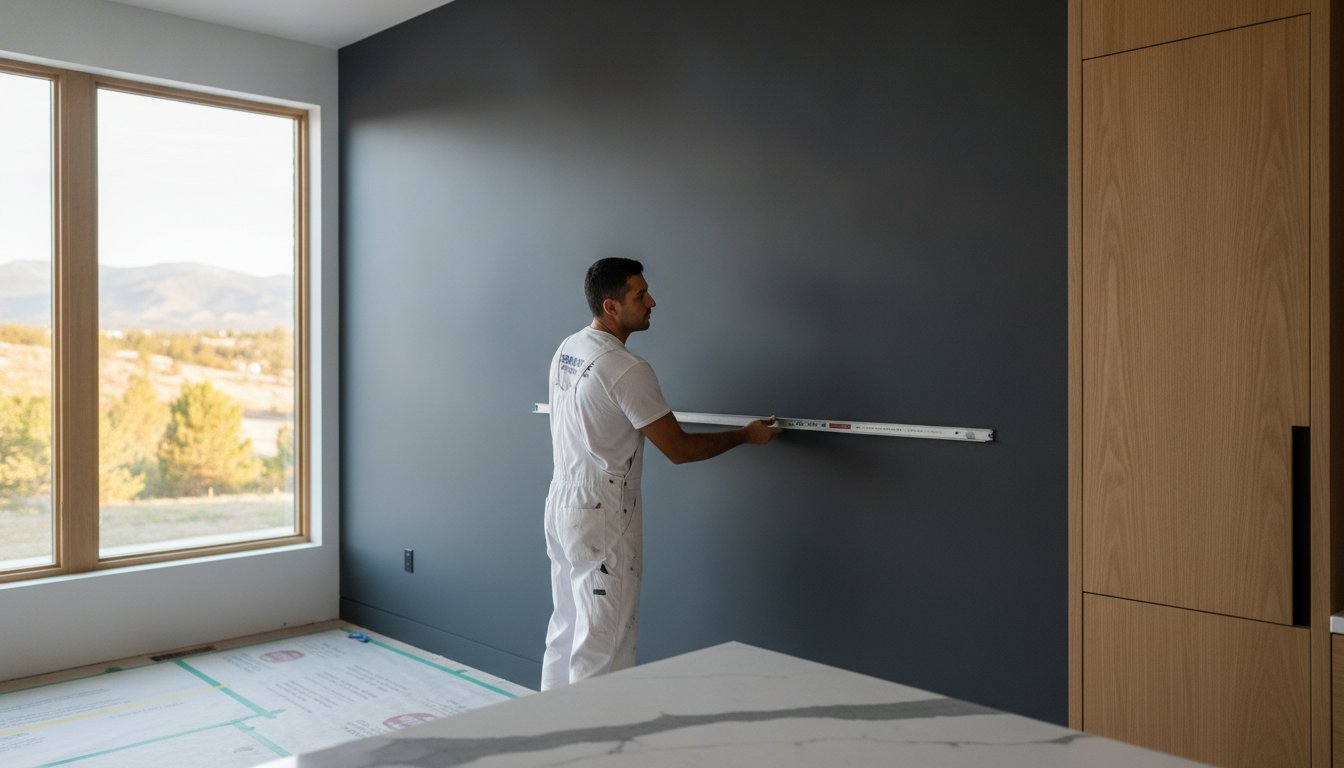
The structural integrity of a luxury renovation is frequently compromised by the very layer intended to protect it. A masterfully crafted kitchen or a custom stone bathroom loses its impact when the surrounding surfaces lack the same level of engineering. High-end homeowners understand that a remodel is an investment in permanence, yet many projects suffer from poor trade coordination where interior painting for home remodel projects fails to complement bespoke millwork or peels prematurely due to improper curing in dry climates. These technical failures represent a lack of professional rigor that can diminish the value of the entire build.
This guide demonstrates how architectural-grade finishes serve as the definitive final layer of technical excellence and structural protection. You'll learn how to secure a flawless, durable result that respects the tolerances of your custom installations. We will examine the engineering of the substrate, the critical management of light-reflective values in specific architectural layouts, and the rigorous scheduling required to eliminate friction between painters and stone specialists. The focus remains strictly on providing the technical information needed to ensure the finish mirrors the caliber of the build itself.
Key Takeaways
- Understand the necessity of Level 5 drywall finishing to create a perfectly flat substrate for high-pigment, premium paints.
- Learn how professional interior painting for home remodel projects acts as a final quality-control layer to protect and enhance custom stone and millwork.
- Master the use of Light Reflective Value (LRV) to ensure paint selections complement specific architectural layouts and lighting conditions.
- Discover strategies for efficient trade coordination to eliminate friction between painters and specialists installing tile, stone, or flooring.
- Gain insights into managing Denver’s dry climate to ensure proper curing and long-term stability of architectural finishes.
The Role of Interior Painting in Comprehensive Home Remodeling
Professional interior painting for home remodel projects represents the final technical layer of a structural renovation. It's the architectural skin that protects the underlying assembly while defining the aesthetic character of the space. While maintenance painting focuses on refreshing existing surfaces, remodeling-grade finishing demands a higher standard of substrate preparation. The painting phase serves as the ultimate audit of the preceding trades; every imperfection in the drywall finishing or gap in the custom millwork becomes visible once the first coat of primer is applied. A flawless finish confirms that the structural work meets the highest professional tolerances.
Achieving a cohesive visual flow across a renovated estate requires more than matching a color palette. It involves substrate stabilization to manage the transition between original structures and new extensions. A master craftsman ensures that the texture and density of the finish remain consistent across varied surfaces, creating a unified environment that feels intentional and permanent. This level of detail transforms a collection of renovated rooms into a singular, architecturally sound home.
Defining the Finish: Beyond Cosmetic Utility
Architectural-grade finishing preserves the integrity of new interior surfaces by providing a durable barrier against environmental stressors. Selection of sheen is a technical decision influenced by the home's architectural lighting design. High-gloss finishes require a perfectly flat substrate to prevent distorted reflections, while matte finishes must offer high-performance scrubbability. In custom kitchens and bathrooms, the application of specialized moisture-resistant coatings is non-negotiable. These finishes prevent vapor penetration and protect the structural elements of the cabinetry and walls from the rigors of daily use.
The Remodeling Workflow: When Painting Happens
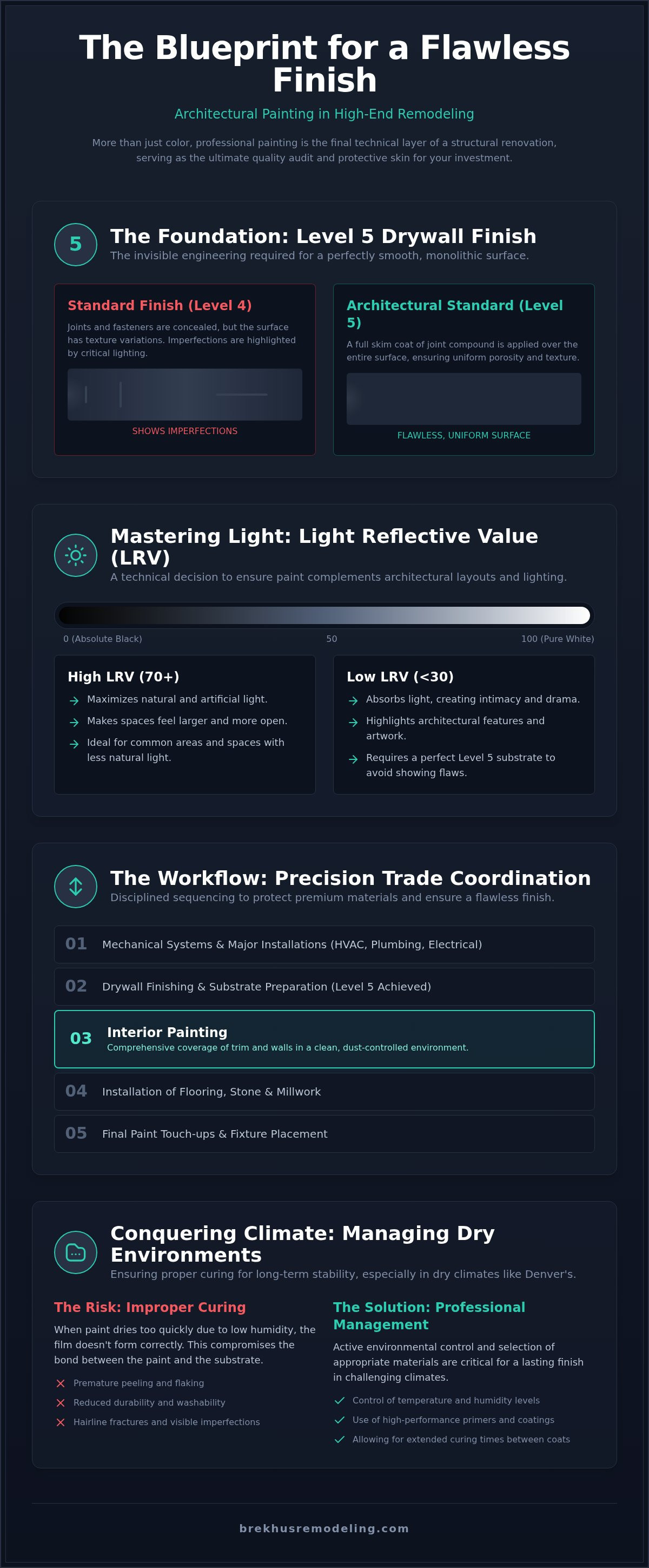
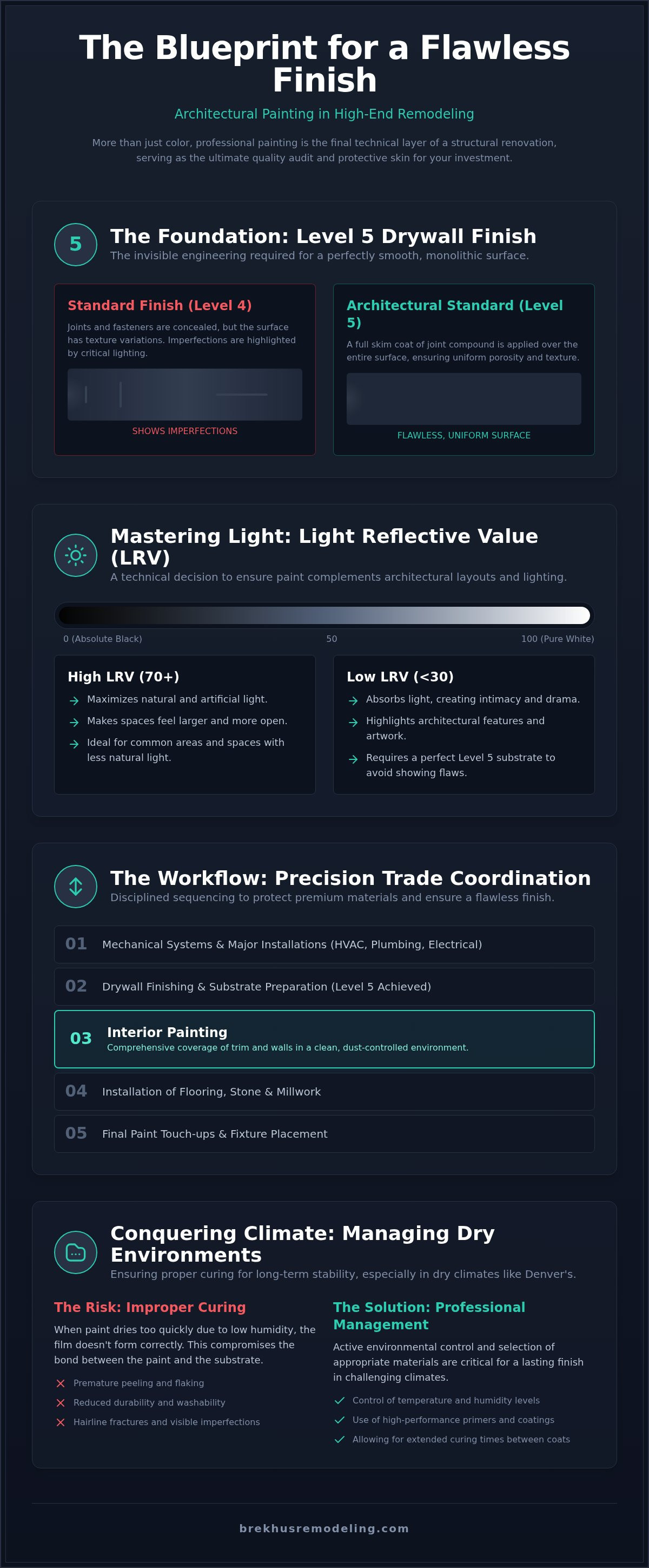
Precise sequencing is the hallmark of a disciplined build. Interior painting for home remodel projects typically follows the completion of mechanical systems and major installations but precedes the final placement of flooring. This order allows for comprehensive coverage of trim and baseboards while minimizing the risk to premium hardwood or stone. Protecting custom-fabricated stone counters and intricate tile work during this stage is a priority. A clean, dust-controlled environment is essential; airborne particulates can compromise the bond of the paint or mar the smoothness of the final coat. Professional coordination ensures that the finishing team operates in a workspace prepared for high-precision execution.
Technical Surface Preparation: The Invisible Foundation
The success of interior painting for home remodel projects is determined long before the first gallon of color is opened. It's a matter of engineering the substrate to a Level 5 finish. This standard requires a full skim coat of joint compound across the entire surface to ensure uniform porosity and texture. Without this rigorous step, critical lighting from floor-to-ceiling windows or high-output architectural fixtures will highlight every joint and fastener. A Level 5 finish provides the monolithic surface required for the high-pigment paints used in luxury estates.
Integrating a new home extension with an existing structure requires sophisticated substrate stabilization. Differential movement between original framing and new lumber often leads to hairline fractures at the transition points. We utilize high-performance mesh tapes and elastomeric compounds to bridge these gaps, ensuring the finish remains intact as the structure settles. In occupied residences, dust mitigation is equally vital. We employ active HEPA air filtration and localized vacuum sanding systems to protect the home's HVAC system and maintain a pristine environment for wet coating applications.
Mastering the Substrate
High-end basement finishing often reveals framing irregularities that must be corrected through mechanical sanding and strategic skim coating. Adhesion is another technical requirement that varies by room. Moisture-prone bathroom walls require specialized primers that bond to high-density substrates, while new wood trim needs specific preparation to prevent grain raise. If you are planning a comprehensive renovation, engaging a specialist in high-end structural finishing ensures these foundational steps are never bypassed. This disciplined approach to interior painting for home remodel work guarantees that the final aesthetic reflects the quality of the underlying build.
Priming for Longevity and Color Accuracy
Professional standards reject the use of "paint-and-primer-in-one" products. These consumer-grade solutions lack the resin density required for structural longevity in high-traffic environments. Remodeling-grade primers serve specific technical roles:
- Tannin Blocking: Specialized sealers prevent natural oils in new cherry, oak, or walnut millwork from bleeding through the finish.
- Substrate Sealing: High-solids primers equalize the absorption rates of new drywall and old plaster.
- Color Foundation: Using tinted primers is essential for deep, saturated colors, allowing the final coats to achieve their intended depth without excessive layers of pigment.
Matching the chemistry of the primer to the specific architectural need ensures that the finish remains stable for years. This technical precision prevents the peeling and fading often associated with improper curing or low-grade materials.
Selecting Premium Finishes for High-End Interiors
The selection of a finish is a technical decision that determines how a renovated space interacts with light and daily use. In a professional interior painting for home remodel project, we prioritize Light Reflective Value (LRV) as a primary metric. LRV measures the percentage of light a color reflects versus how much it absorbs. In large-scale structural renovations, managing this value is critical to ensure that the architectural volume feels intentional. A high LRV can make a confined basement extension feel expansive, while lower values provide the necessary depth for intimate libraries or primary suites. This isn't merely about color; it's about the engineering of the home's atmosphere.
Professional-grade materials differ from retail options through their pigment density and resin quality. High-pigment paints offer a depth of color that remains stable under varied lighting conditions, preventing the "washed out" appearance common with lower-grade pigments. Modern residential health standards also dictate the use of low-VOC or zero-VOC coatings. These formulations ensure that the indoor air quality of a newly finished estate remains pristine, meeting both environmental requirements and the expectations of high-end homeowners.
The Science of Sheen and Light
Sheen selection balances aesthetic goals with mechanical durability. While a matte finish provides a sophisticated, non-reflective appearance that hides minor substrate variances, an eggshell or satin finish offers the scrubbability required for high-traffic hallways and kitchens. High-gloss coatings are reserved for architectural highlights, such as custom millwork or coffered ceilings, where they serve to accentuate the precision of the carpentry. In Denver, the intensity of high-altitude sunlight must be considered. The UV exposure in rooms with southern orientations can cause rapid color shifting, requiring finishes with superior lightfastness to maintain the original design intent.
Material Compatibility in Remodeling
Successful interior painting for home remodel work requires matching coatings to specific substrates. Custom stone installations and premium cabinetry require specialized finishes that won't off-gas or react with the materials. For basement environments, we utilize coatings with higher permeability to manage potential humidity, preventing the bubbling or peeling associated with trapped moisture. In high-traffic areas, ceramic-infused paints provide a rugged, burnish-resistant surface that maintains its integrity against physical impact. This level of material compatibility ensures that the final aesthetic is as durable as the structural components of the remodel.
Coordinating Painting with Stone, Tile, and Millwork
The "Trade Dance" is a critical phase of any high-stakes renovation. Interior painting for home remodel projects requires precise timing to avoid trade overlap friction and protect newly installed materials. Master craftsmen must coordinate with stone and tile installers to ensure that wet coatings do not interfere with the placement of custom-fabricated slabs. We prioritize a clean environment; protecting high-end stone counters and premium flooring with heavy-duty surface guards is mandatory before the final finish begins. Integrated project management is the only way to ensure that no trade compromises the work of another, maintaining the structural and aesthetic integrity of the entire build.
The Aesthetic Intersection
The relationship between wall color and stone texture is a matter of architectural logic. A sophisticated paint palette should complement the veining in a marble backsplash or the ruggedness of a stacked stone fireplace. In custom kitchens, the wall finish must enhance the island design without competing for attention. We also ensure that bathroom wall finishes are coordinated with grout colors to create a unified, purposeful aesthetic. This level of detail ensures that individual high-end components function as a single, cohesive design rather than a collection of unrelated upgrades.
Technical Integration
Interior painting for home remodel work is only successful when the sequence of operations is strictly followed. Caulking and sealing represent the critical bridge between carpentry and painting. Every joint where custom millwork meets the wall is treated with high-flexibility sealants to prevent cracking as the home settles. We maintain a strict protocol for protecting the build:
- Surface Guarding: Applying impact-resistant protection to custom stone and millwork.
- Cure Time Management: Ensuring paint reaches full chemical hardness before installing heavy cabinetry.
- Atmospheric Control: Managing airflow to prevent dust contamination during the final coating.
The final stage is a rigorous punch-list process. We inspect every transition under high-output lighting to confirm the finish meets our standards of accuracy. If you are ready to start a project that demands this level of technical oversight, contact our team for a full remodel consultation.
The Brekhus Standard: Precision Painting for Denver Estates
The Brekhus standard for interior painting for home remodel projects is built on a foundation of professional rigor and technical accountability. Since 2004, we've approached the finishing phase as a critical engineering task rather than a cosmetic afterthought. This disciplined approach ensures that the final layer of your renovation provides both structural protection and aesthetic excellence. We don't just apply pigment; we execute a finishing plan that respects the architectural intent of the entire build.
Denver’s semi-arid environment presents unique challenges for architectural finishes. Low humidity levels can cause paint to dry too quickly, leading to poor leveling and visible brush marks. We utilize specific climate-control protocols and specialized formulations to ensure proper curing. This attention to detail extends to wood stability. We monitor the moisture content in custom millwork to prevent the shrinkage or expansion that can compromise a perfect finish in our dry mountain climate.
Operating as a single-source contractor provides a distinct advantage for high-stakes renovations. By integrating plumbing, electrical, and painting, we eliminate the coordination gaps common in multi-trade projects. When the same team that manages your custom kitchen or bathroom also handles the final finish, the result is a level of continuity that separate subcontractors cannot match. This integrated model ensures that technical standards remain high from the initial framing to the final coat of paint.
A Legacy of Craftsmanship
Our specialized expertise in stone and tile installation informs our painting standards. We understand the physical tolerances of premium materials and how they interact with architectural coatings. Meticulous planning is the hallmark of our process. We manage complex residential transformations by treating every surface as part of a larger structural system. This commitment to technical merit is why Denver homeowners trust us with their most ambitious architectural projects.
Your Next Step in Home Transformation
The value of a professional consultation for your upcoming full remodel cannot be overstated. Ensuring your investment is protected requires master-level finishing and a deep understanding of local building requirements. We invite you to contact Brekhus Remodeling to discuss how we can bring precision engineering to every detail of your home. Our team is ready to guide you through the technical requirements of a high-end interior painting for home remodel, ensuring a result that stands the test of time.
Securing the Integrity of Your Architectural Vision
Achieving a superior result in a high-end renovation requires a transition from cosmetic thinking to structural engineering. Every phase of professional interior painting for home remodel work, from Level 5 skim coating to the precise calculation of light-reflective values, serves to protect your investment. A disciplined approach ensures that custom millwork and stone installations are integrated into a monolithic architectural finish rather than just painted. This level of technical merit is what separates a standard renovation from a professional estate transformation.
Since 2004, we've served as Denver-based residential specialists committed to this standard of professional rigor. Our deep expertise in high-end stone and tile integration informs our painting standards, allowing us to manage the technical intersections of a complex build with precision. Through full-service technical coordination, we eliminate the friction between trades and deliver a result that reflects the true caliber of your home. Consult with our master craftsmen for your Denver home remodel to ensure your project is executed with technical merit. We look forward to bringing structural permanence and aesthetic excellence to your next transformation.
Frequently Asked Questions
How long should I wait to paint after new drywall is installed?
Drywall compound must be fully cured and sanded before priming. In a controlled environment, this typically takes 24 to 48 hours depending on the thickness of the joint compound and ambient conditions. Applying primer too early traps moisture, which leads to joint telegraphing or future peeling. A professional interior painting for home remodel ensures the substrate is verified dry with a moisture meter before proceeding to the Level 5 finishing stage.
What is the best paint finish for a custom bathroom remodel?
High-moisture environments require specialized finishes with antimicrobial properties and superior vapor resistance. A satin or semi-gloss sheen is historically preferred for its scrubbability, though modern architectural-grade matte finishes now offer comparable performance with a more sophisticated aesthetic. These premium coatings prevent moisture penetration into the substrate. Coordination during a custom bathroom remodel ensures the paint chemistry matches the high-density requirements of moisture-prone walls.
How does Denver’s low humidity affect interior painting projects?
Denver’s semi-arid climate causes architectural coatings to dry rapidly; this can compromise the open time needed for a smooth, level finish. This accelerated drying often results in visible brush marks or lap lines if not managed by a master craftsman. We utilize specific additives and environmental controls to extend the curing process. This technical adjustment is essential for maintaining the structural integrity and aesthetic smoothness of the finish in high-altitude environments.
Do I need to paint my ceilings every time I remodel a room?
Ceiling finishes should be addressed during any significant structural renovation to ensure visual continuity. New wall extensions or structural changes often reveal shifts in light-reflective values that make older ceiling paint appear yellowed or textured. Painting the ceiling provides a clean, monolithic plane that complements new architectural lighting. It also serves as a final seal against dust and particulates generated during the remodeling process.
Can professional painting hide imperfections in old walls during a remodel?
Professional painting cannot hide structural imperfections without significant substrate preparation. Hiding cracks or uneven surfaces in old walls requires a Level 5 skim coat to create a perfectly flat foundation. Once the substrate is engineered to this standard, premium matte finishes can be used to minimize the visibility of remaining minor variances. Simply applying a thicker coat of paint is a temporary solution that lacks long-term durability.
What is the difference between architectural-grade paint and retail paint?
Architectural-grade paints feature higher pigment loads and superior resin quality compared to retail-grade options. These materials provide greater depth of color and increased resistance to burnishing or physical impact. Retail paints often rely on fillers that compromise the film's strength and longevity. For a high-end interior painting for home remodel, architectural-grade coatings are necessary to achieve the durability and lightfastness required in luxury residential estates.
How do you protect my new stone counters and tile during the painting phase?
We utilize a multi-layered protection strategy for custom stone and tile. This includes the application of impact-resistant floor guards and non-marring tapes that leave no residue on sensitive surfaces. Every stone counter is encased in heavy-duty plastic sheeting before any wet coatings are introduced to the workspace. This rigorous protection protocol ensures that the final finishing stage does not compromise the integrity of bespoke masonry or premium flooring.
Is it better to paint before or after my custom cabinets are installed?
The optimal sequence involves applying the prime coat and first finish coat before cabinet installation, followed by a final trim and touch-up phase. This allows for comprehensive coverage of the walls behind the cabinetry and reduces the risk of paint splatter on new custom millwork. Integrated project management ensures that cure times are respected before heavy units are mounted; this prevents damage to the newly finished surfaces.