Smart Home Wiring for Remodels: The Professional Guide to Infrastructure
Planning smart home wiring for remodels? Our pro guide shows why a hardwired Cat6a backbone is crucial for reliability, beating Wi-Fi in luxury renovations.
Wireless technology is a luxury of convenience, but it is a failing foundation for a high-performance residential estate. Many homeowners mistakenly believe that the advent of Wi-Fi 7 eliminates the necessity for physical cables, only to face intermittent connectivity and signal degradation in large-scale renovations. When executing smart home wiring for remodels, you must prioritize a hardwired backbone to ensure the structural integrity of your digital environment. It's a common frustration to see premium systems falter because they rely on invisible signals rather than a disciplined, physical infrastructure.
This professional guide outlines the technical requirements for building a permanent, high-performance network during your renovation. You'll learn how to implement Category 6a cabling and Power over Ethernet standards to support seamless integration of lighting, security, and climate systems. We examine the necessity of a centralized tech closet, the implications of the NEC 2026 updates regarding limited energy circuits, and the strategic deployment of data drops that secure your property's long-term value and performance.
Key Takeaways
- High-performance infrastructure requires Cat6a or fiber optic cabling to support 10Gbps+ speeds and Power over Ethernet (PoE) for maximum device reliability.
- Executing smart home wiring for remodels during the "walls-open" phase provides a unique opportunity to install a low-voltage backbone that is impossible to retrofit later.
- Hardwiring eliminates the latency and signal interference issues common in luxury residences built with dense materials like stone, tile, and masonry.
- Strategic planning requires running neutral wires to every switch for smart lighting and dedicated power to window headers for motorized shades during the framing stage.
- Professional coordination between technical rough-ins and structural phases ensures that smart systems align perfectly with the architectural integrity of the home.
The Evolution of Smart Home Wiring in Modern Remodels
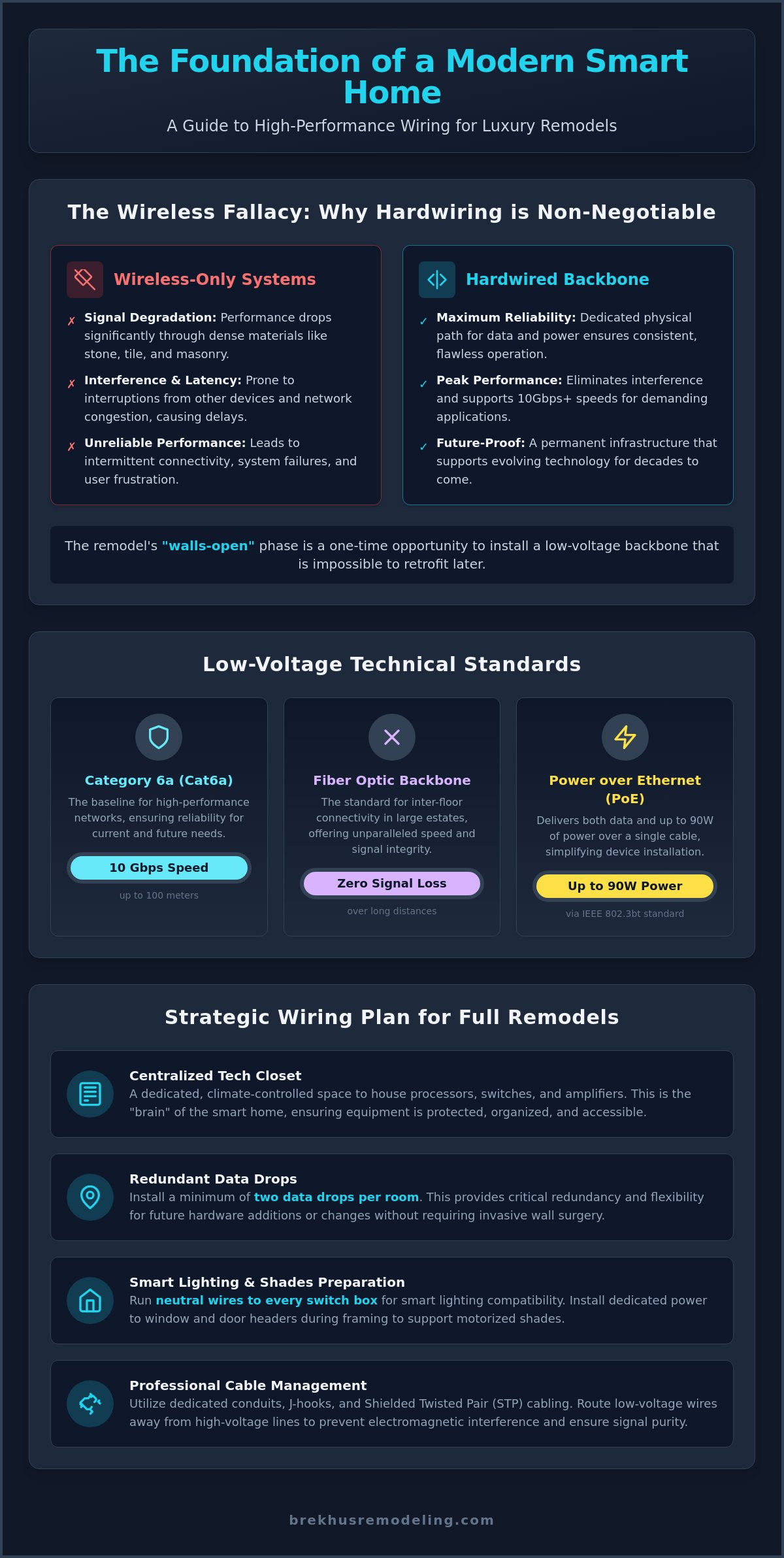
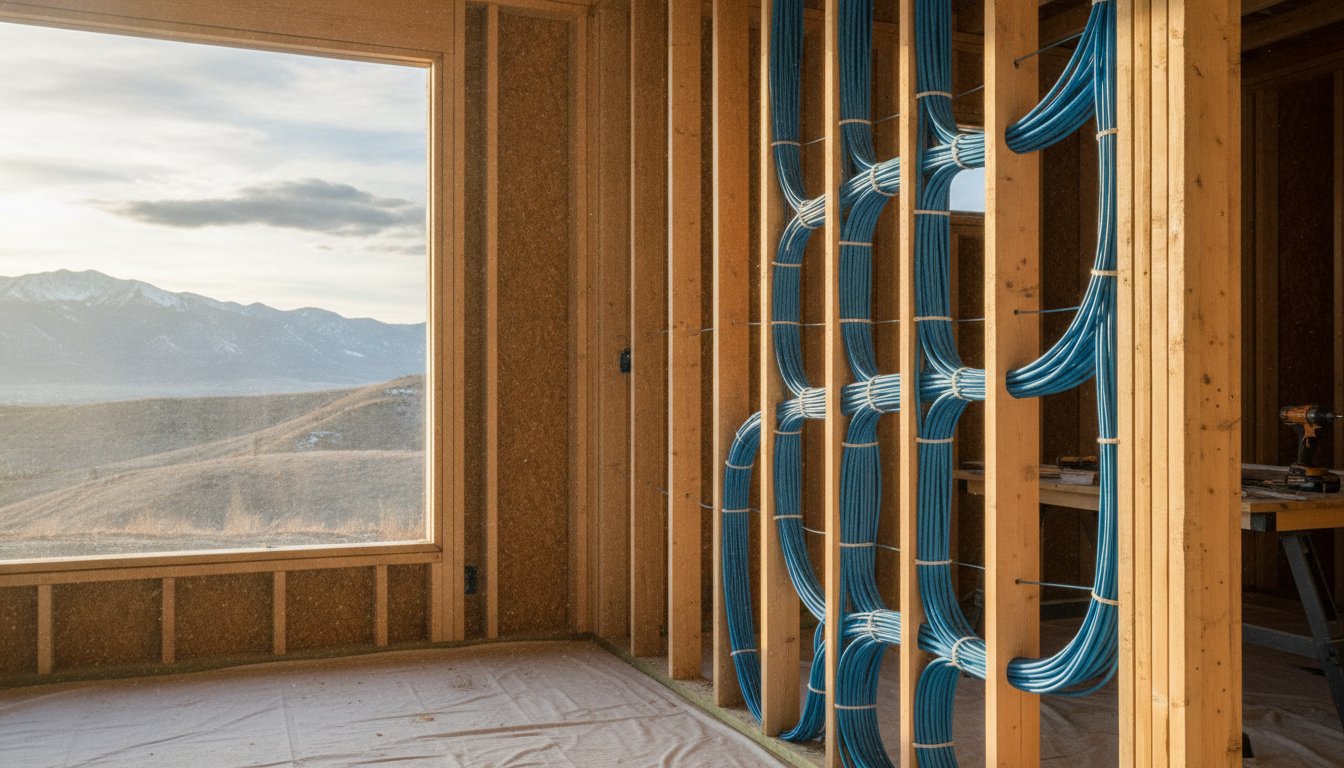
Smart home wiring for remodels serves as the low-voltage backbone of a modern residence. It is the invisible nervous system that dictates the performance of every integrated system. Unlike consumer-grade wireless add-ons that often suffer from signal interference and latency, professional-grade hardwired infrastructure provides a dedicated, shielded path for data and power. A full remodel or basement finishing project presents a rare "walls-open" opportunity. This phase allows for the installation of structured cabling that would be prohibitively expensive or physically impossible to retrofit once the drywall is sealed and the stone finishes are in place.
Modern home automation relies on a sophisticated hierarchy of physical components to maintain stability. Professional infrastructure includes several core elements:
- Structured Cabling: High-bandwidth runs of Cat6a or Fiber Optic lines that handle massive data loads.
- Centralized Hubs: Dedicated equipment racks or "tech closets" that house processors, switches, and amplifiers.
- Dedicated Circuits: Isolated power paths that protect sensitive hardware from electrical noise and surges.
- Shielded Pathways: Strategic routing that prevents electromagnetic interference from high-voltage lines.
Why Infrastructure Precedes Device Selection
The physical wire is the only permanent element of a smart home. While touchscreens, cameras, and hubs evolve every few years, the cabling remains embedded within the structure. High-bandwidth smart home wiring for remodels ensures that your home supports future 10Gbps+ speeds without requiring invasive renovations later. This approach treats technology as a structural component rather than a superficial accessory. By prioritizing the backbone, you preserve the home's systems' integrity and ensure lifelong reliability through every technological shift.
The Role of Professional Electrical Installation
Standard electrical work focuses on high-voltage power delivery, but smart home wiring requires a different level of technical rigor. Professional electrical installation for these systems involves precise cable management and adherence to specific low-voltage standards. In Denver, residential codes and technical requirements dictate how limited-energy circuits must be routed and protected within a high-end build. A master craftsman understands these nuances, ensuring that every run is organized, labeled, and tested for performance. This level of precision separates a high-performance remodel from a basic setup. It's about engineering a system that performs flawlessly under the most demanding residential conditions.
Low-Voltage Infrastructure: The Technical Standards
Professional smart home wiring for remodels demands a higher threshold of performance than standard consumer-grade installations. While basic forums often suggest Category 6 cabling is sufficient, high-end residential projects require Category 6a (Cat6a) as the absolute baseline. This standard supports 10Gbps data speeds over distances up to 100 meters, providing the necessary overhead for 8K video streaming and high-fidelity audio distribution. For luxury home extensions and multi-story renovations, integrating a Fiber Optic backbone is becoming the standard for inter-floor connectivity, ensuring zero signal degradation across the estate's primary data arteries.
Power over Ethernet (PoE) has revolutionized how we deliver energy to peripheral devices. The IEEE 802.3bt standard now allows for up to 90W of power delivery over a single Ethernet cable. This capability eliminates the need for localized power outlets at every device location, simplifying the installation of high-resolution security cameras, sophisticated touchscreens, and wireless access points. To maintain the integrity of these signals, we utilize Shielded Twisted Pair (STP) cabling. This shielding is critical in luxury remodels where dense electrical loads and high-voltage lines can create electromagnetic interference, potentially compromising the stability of the low-voltage network.
Structured Cabling for High-Performance Networking
A disciplined infrastructure plan requires at least two data drops per room to ensure redundancy and hardware flexibility. In the context of a full remodel, managing these cable pathways is a matter of engineering precision. We utilize dedicated conduits and J-hooks to organize cable runs, preventing tension and ensuring that future upgrades don't require invasive wall surgery. A disciplined approach to electrical and technical rough-ins ensures that these standards are met before the first sheet of drywall is hung. This methodical planning transforms a simple renovation into a future-proofed digital environment.
The Importance of a Dedicated Media Hub
Consolidating hardware into a centralized media closet or rack system is essential for both performance and aesthetics. Moving processors, network switches, and amplifiers out of living spaces protects the home's design while centralizing maintenance. These tech closets require rigorous thermal management to prevent hardware failure. Professional rack systems must include active ventilation and climate monitoring to dissipate the heat generated by high-performance components. Accessibility is equally vital. A well-designed hub allows for seamless serviceability without disturbing the home's finished surfaces, maintaining the balance between technical capacity and architectural elegance.
The Wireless Fallacy: Why Hardwiring is Mandatory
Wireless technology represents a convenient layer for mobile devices, but it is a catastrophic failure point for core infrastructure. Relying solely on radio frequencies for a home's operational systems introduces unacceptable levels of latency and instability. For a truly high-performance residence, smart home wiring for remodels provides the only definitive solution for uninterrupted performance. Physical connections eliminate the variables of signal interference and congestion that plague even the most advanced mesh networks. A wired backbone isn't an alternative to Wi-Fi; it is the prerequisite for a functional digital environment.
Every device transitioned to a hardwired connection removes unnecessary traffic from the wireless spectrum. This concept of "spectrum hygiene" ensures that the Wi-Fi remains available and responsive for its intended purpose: mobile phones, tablets, and guest access. By offloading static devices like televisions, security cameras, and lighting processors to a wired backbone, you guarantee that the home's primary functions remain operational even if the wireless network is compromised or overloaded. It's a matter of technical discipline that separates a hobbyist setup from a professional-grade estate.
Reliability in High-Density Environments
Luxury architectural materials are the natural enemies of wireless signals. Custom tile installations, natural stone veneers, and thick masonry walls act as effective RF shields, creating dead zones in the very areas where connectivity is most vital. Automated climate controls or security sensors located behind these materials will experience frequent dropouts without a physical data path. Critical systems, including entry gates and perimeter cameras, must never rely on wireless protocols. These components require the unwavering reliability of a copper or fiber connection to ensure they function during power fluctuations or localized signal jamming. When the walls are open during a renovation, failing to run these lines is a strategic error that compromises the home's long-term utility.
Security and Privacy Advantages of Wired Systems
A physical connection offers a level of security that radio waves cannot replicate. Wireless protocols are inherently susceptible to external interception and unauthorized access; a wired system requires physical access to the infrastructure to be compromised. This significantly reduces the external attack surface of the residence. Hardwired connections provide long-term stability that software-dependent wireless standards lack. A copper wire doesn't require a firmware update to maintain its physical link. It remains a permanent, secure, and silent contributor to the home's technical integrity. Privacy and performance should be built into the structural framework of the house rather than broadcast through the air for any nearby receiver to detect.

Strategic Wiring Categories for a Full Remodel
Categorizing smart home wiring for remodels into functional zones allows for disciplined execution during the framing and rough-in phases. Each category, including lighting, audio, security, and environmental control, requires specific cable standards to ensure peak performance. Professional lighting systems demand a neutral wire at every switch box to power the smart dimmers themselves. We utilize 14/2 or 12/2 Romex depending on the circuit load, ensuring the electrical foundation supports advanced keypad controls without flickering or load issues. This level of planning prevents the need for invasive wall surgery after the final painting is complete.
Architectural audio and security systems require similar technical rigor. For whole-home audio, we utilize 14-gauge or 16-gauge oxygen-free copper (OFC) speaker wire to prevent signal loss over long distances. Precise placement during the framing phase ensures speakers align with the room's acoustic and aesthetic center. Security infrastructure relies on Cat6a for Power over Ethernet (PoE) cameras, providing both data and power through a single run. We also prioritize hardwired contact sensors for doors and windows using 22/2 or 22/4 shielded wire. These sensors offer immediate response times and superior longevity compared to battery-dependent wireless alternatives.
Lighting and Climate Control Foundations
Modern HVAC systems require a dedicated "C-wire" for constant power to smart thermostats. We integrate 18/5 or 18/8 thermostat wire to support multi-stage heating and cooling across different zones. Strategically placed temperature and occupancy sensors allow the home to react dynamically to environmental changes, creating a truly automated atmosphere. By running these lines during a full remodel, you ensure that climate sensors are positioned for accuracy rather than convenience. This results in a system that is as energy-efficient as it is responsive.
Automated Window Treatments and Privacy
Motorized shades are a hallmark of a premium residential estate. We run dedicated 16/2 or 16/4 low-voltage power lines to every window header during the framing stage. This eliminates the maintenance burden of changing batteries and ensures that shades operate in perfect synchronization across an entire room. Coordinating this wiring with the window and door installation phases allows for hidden power supplies and seamless architectural integration. The aesthetic benefit of a completely concealed power source cannot be overstated; it preserves the clean lines of your home's design while providing the luxury of automated privacy and light control at the touch of a button.
The Brekhus Approach: Coordinating Tech and Construction
Successful smart home wiring for remodels requires a disciplined integration between technical infrastructure and structural engineering. At Brekhus Remodeling, we treat low-voltage systems as a primary architectural component rather than a secondary addition. This coordination is most critical during complex home extensions where the digital backbone must bridge existing structures and new construction. A failure to synchronize these phases results in compromised performance and visible retrofits that detract from the home's aesthetic value. Precision craftsmanship in every cable run and wall plate ensures that the technology remains a silent, reliable servant to the home's occupants.
The timeline of a professional installation follows a rigorous two-phase process: the rough-in and the trim-out. During the rough-in phase, which occurs immediately after framing and before insulation, we secure all structured cabling and conduit paths. This is the only window to establish a permanent physical foundation. The trim-out phase occurs after the final painting and stone installation are complete, involving the mounting of hardware, termination of jacks, and system calibration. This methodical approach requires constant collaboration between architects, interior designers, and our electrical specialists to ensure that every sensor and keypad aligns with the broader design vision.
Integrating Tech into Custom Kitchens and Bathrooms
High-traffic areas like premium kitchens and custom bathrooms demand specialized technical considerations. In custom shower installs, we integrate shielded, waterproof audio systems and lighting controls that adhere to strict safety codes while providing a bespoke wellness experience. Kitchen renovations benefit from hidden charging stations and dedicated data drops for smart appliances, ensuring that high-performance connectivity doesn't clutter the stone countertops. We prioritize maintaining a premium finish by utilizing flush-mount sensors and architectural-grade faceplates that disappear into the surrounding materials, preserving the integrity of the design.
Planning Your Denver Smart Home Remodel
Executing a technical renovation in 2026 requires a comprehensive electrical plan long before the first demolition crew arrives. This document serves as the blueprint for the home's future capabilities, accounting for the NEC 2026 updates and the bandwidth requirements of emerging hardware. Brekhus Remodeling manages this technical rigor by overseeing the entire lifecycle of the build, ensuring that the structural logic of the remodel supports the sophisticated tech within. Homeowners beginning a project should prioritize the infrastructure today to avoid the obsolescence of tomorrow. To secure the longevity of your residence, you may consult with Brekhus Remodeling on your technical renovation plan to ensure every detail is engineered for excellence.
Securing Your Estate's Digital Longevity
Professional smart home wiring for remodels is a fundamental structural investment rather than a mere technical upgrade. Establishing a hardwired backbone during your renovation ensures that your home functions with the precision and reliability that luxury living demands. By prioritizing high-bandwidth structured cabling and centralized infrastructure, you eliminate the inherent instability of wireless-only systems. This disciplined approach preserves your property's aesthetic integrity while providing a permanent foundation for future technological evolution.
Brekhus Remodeling has served the Denver community with master-level craftsmanship since 2004. We provide expert electrical and structural coordination for complex, high-performance renovations. Every project benefits from precision engineering to ensure long-term value and operational excellence. Your home deserves a digital infrastructure that is as enduring as its architecture. Start your high-end remodel with Brekhus Remodeling to ensure your next project meets the highest standards of modern performance. Build with the confidence that your home's systems are engineered for life.
Frequently Asked Questions
Is it worth wiring a house for Ethernet in 2026?
Hardwiring remains the only method to guarantee consistent 10Gbps performance and zero-latency connectivity. While Wi-Fi 7 provides impressive speeds for mobile devices, it cannot match the stability of a physical backbone for static hardware like 8K televisions, security processors, and automation hubs. A wired foundation prevents the signal congestion that occurs when dozens of smart devices compete for wireless bandwidth in a high-density residential environment.
What is the best wire to use for a smart home remodel?
Category 6a (Cat6a) is the current professional standard for residential infrastructure. It supports 10Gbps data speeds at a 500MHz frequency, providing the necessary overhead for future technological shifts. For larger estates or multi-story home extensions, we also recommend running fiber optic lines between primary network switches to ensure a lossless data backbone across the entire property.
Can I add smart home wiring after the remodel is finished?
Retrofitting technology after a project is complete is significantly more invasive and costly. It often requires cutting through finished drywall, custom tile, or stone veneers, which compromises the architectural integrity of your home. Executing the wiring during the "walls-open" phase is the only way to ensure a clean, concealed installation without the need for expensive repairs to your premium finishes.
How much does smart home wiring add to a remodeling budget?
The investment represents a small percentage of a total structural renovation but varies based on the scale of the integrated systems. It's always more cost-effective to install smart home wiring for remodels during the rough-in stage rather than attempting to add it later. This proactive approach eliminates the high labor costs associated with fishing cables through finished structures and ensures your home is technically current from day one.
Do I need a special electrical panel for a smart home?
A standard electrical panel is usually sufficient, provided it has the physical space for smart breakers and dedicated circuits. We prioritize installing panels that support whole-home surge protection to shield sensitive low-voltage components from electrical noise and voltage spikes. It's vital to ensure your panel has the capacity to support the centralized tech closet and any high-draw appliances integrated into the system.
What is low-voltage wiring and why does it matter for my remodel?
Low-voltage wiring refers to the "limited energy" circuits that carry data and signals rather than high-voltage power. This infrastructure serves as the nervous system for your security, audio, and climate control systems. It matters because these lines require specific routing and shielding to prevent electromagnetic interference from standard electrical runs, ensuring your automation remains responsive and reliable.
Should I wire for smart lighting or just use smart bulbs?
Professional smart home wiring for remodels focuses on hardwired switches and dimmers rather than consumer-grade bulbs. Wired switches ensure that your lighting remains functional even if your internet connection or wireless router fails. This approach provides a permanent, reliable solution that integrates seamlessly with your home's electrical foundation, whereas smart bulbs are temporary accessories that often suffer from connectivity issues.
How does smart home wiring affect the resale value of my home?
Professional infrastructure significantly enhances the marketability and value of a modern residence. High-end buyers increasingly view a robust, hardwired backbone as a standard requirement for a premium estate. A home that is already engineered for advanced security, privacy, and automation stands out in the Denver market as a move-in ready property that won't require invasive technical upgrades in the near future.